
Tunde runs a small logistics firm in Ibadan. He budgeted ₦250,000 a month for a new dispatch coordinator and thought that number closed the file. Three months later, pension remittances, a HMO plan, and a replacement laptop had pushed his actual spend well past that figure. Tunde had budgeted for a salary, not for the full employee cost of hiring someone.
This mistake shows up across Nigerian SMEs. Salary is the number on the offer letter, but employee cost includes far more than that. It includes statutory deductions, employee benefits cost, and a set of operational expenses many employers only discover after the first payday. This article breaks down each layer, so you can budget with the real number instead of the salary alone. If you want to see the math play out with a worked example, this breakdown of what an employee really costs a Nigerian business is a useful companion to this piece.
What Employee Cost Actually Covers
Employee cost is not one line item. It is the sum of everything a business spends to keep a person employed and productive. Three layers make up this total.
- Direct pay: basic salary, housing and transport allowances, and bonuses.
- Statutory obligations: pension, NSITF, ITF, NHF, and other deductions the law requires.
- Employee benefits and overhead: HMO cover, data and feeding allowances, equipment, and training.
Most employers budget only for the first layer. The other two are where employee cost quietly grows, and where cash flow problems usually start.
The gap catches even careful business owners off guard. Payroll on a spreadsheet tends to track salary in one tab and statutory deductions in another, so the total employee cost never shows up as a single figure. Naira volatility adds to this, since owners often anchor on the salary number they agreed at hire and forget that the surrounding costs rise with inflation too. By the time the full picture comes together, months of underbudgeting have already passed.
The Statutory Deductions Every Employer Must Budget For
Nigerian labour law sets clear statutory obligations, and each one adds to your total employee cost.

- Pension: employers with three or more staff must contribute 10% of monthly emoluments to each employee’s Retirement Savings Account, on top of the employee’s own 8% deduction.
- PAYE: under the Nigeria Tax Act 2025, employees earning ₦800,000 or less annually pay no PAYE tax, while six progressive bands apply above that threshold, up to 25%. PAYE will not stretch your wage bill directly, but remitting it correctly is still a cost in staff hours and penalty risk.
- NSITF: 1% of total monthly payroll, covering workplace injury.
- ITF: 1% of annual payroll for employers with five or more staff, or annual turnover above ₦50 million.
- NHF: 2.5% of basic salary, where applicable.
- NHIS: employers with ten or more staff are expected to contribute toward employee health cover.
Miss a deadline and penalties stack on top of an already growing employee cost. Pension remittances are due within seven days of salary payment, with a 2% monthly penalty for late payment. This breakdown of salary, tax, and pension deadlines every Nigerian employer should know is worth bookmarking so nothing slips.
To put the numbers together, a ₦400,000 monthly salary at a business with ten or more staff carries roughly ₦40,000 in employer pension, ₦4,000 in NSITF, and further NHIS and ITF contributions depending on headcount and turnover. None of these figures are large on their own, but combined they routinely add 15% to 25% on top of the salary line before a single employee benefit or piece of equipment enters the budget.
Employee Benefits Cost: The Line Most Budgets Miss
Statutory deductions are fixed by law, so most employers eventually account for them. Employee benefits cost works differently. It is discretionary, but skipping it usually costs more in turnover than it saves in cash.
Common benefits Nigerian employers budget for include HMO or health cover, a data or transport allowance, a 13th month or end of year bonus, and paid leave beyond the statutory minimum. None of these carry the same legal weight as pension, but they shape whether a candidate accepts an offer and whether they stay past the first year.
Employee benefits cost also shifts by role and industry. A tech company hiring developers in Lagos competes against firms already offering strong HMO plans and remote work stipends. Leaving employee benefits cost out of your budget means competing on salary alone, which rarely works for a growing SME on a tight margin. If you have not reviewed your offering lately, this comparison of employee benefits management platforms for Nigerian businesses is a good place to start.
The Hidden Costs That Don’t Show Up on a Payslip
Beyond statutory deductions and benefits, a third category of employee cost hides in daily operations.
- Recruitment: job board fees, agency commissions, and the hours your team spends interviewing instead of doing revenue work.
- Onboarding: new hires rarely perform at full output in their first few months, so you pay full salary for partial productivity.
- Equipment and tools: laptops, software licenses, and internet or fuel allowances for remote staff.
- Turnover: the most expensive hidden employee cost of all. Replacing a salaried employee can cost six to nine months of their salary once recruiting, training, and lost productivity are added up.
Some of this cost is easy to overlook because it does not arrive as an invoice. Lagos traffic alone can push a remote or hybrid arrangement into the budget, and a generator or inverter for a home office adds a recurring fuel cost most offer letters never mention. None of these show up on a payslip, but they are just as real a part of employee cost as pension or PAYE.
Turnover rarely comes down to pay alone. Employees often leave over unclear growth paths or poor management, even when salary and benefits look competitive on paper. This piece on why employees leave even when salaries are paid digs into that pattern, and it is worth reading before you assume a raise alone will fix a retention problem.
How to Budget for the Real Employee Cost
Before your next hire, add four numbers together: gross salary, statutory deductions, employee benefits cost, and a realistic onboarding or turnover buffer. That total is what you should compare against your budget and revenue per employee, not the salary figure alone.
This matters most at the point of writing an offer letter, when it is easy to anchor on the number a candidate expects rather than what the role will actually cost. Building statutory deductions and employee benefits cost into your budget from day one also makes it easier to hold that budget across a full financial year, instead of adjusting it every time a new remittance or renewal comes due.
A few habits make this easier to sustain. Review your statutory obligations every time headcount crosses a new threshold, since ITF and NHIS liability changes at five and ten employees. Revisit employee benefits cost annually rather than at hire, since HMO premiums and allowances tend to rise with inflation. And treat onboarding time as a real cost with a start and end date, not an open-ended grace period, so it stays part of the budget rather than a surprise absorbed by cash flow.
Budget With the Real Number, Not the Salary Line
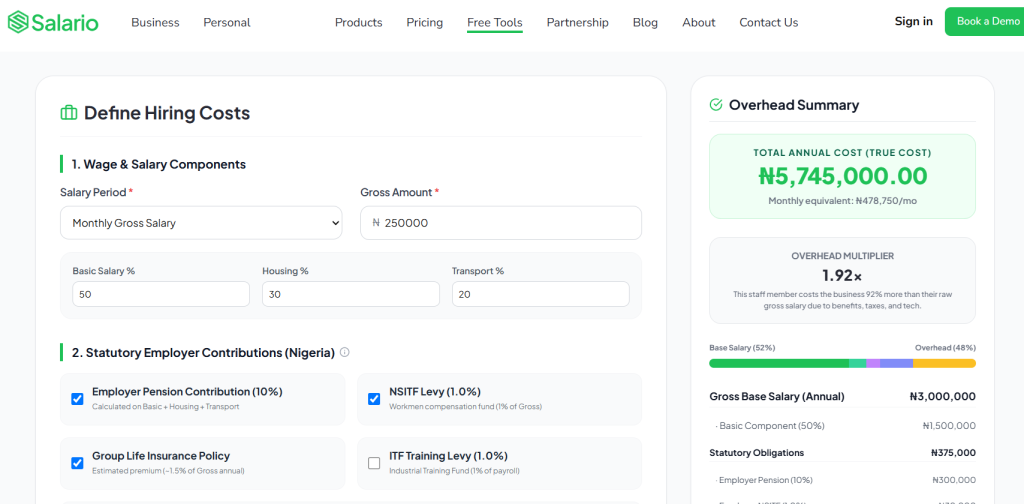
Salary is where hiring conversations start, but it is not where employee cost ends. Statutory deductions, employee benefits cost, and hidden operational expenses all add to what a hire actually costs your business. Skipping any of them is how SMEs run into mid-year cash flow surprises.
Guessing at these numbers is the harder path. Salario’s free Employer Cost Calculator adds up the salary, statutory deductions, and typical benefits for any role in minutes, so you know the full number before you extend an offer. Calculate the full employer cost for your next hire, and budget with confidence instead of guesswork.