

Nigeria pulled in $23.21 billion in capital importation in 2025, an 88.5 percent jump and the highest figure in seven years. That number tells a good story about founders raising in the US and channeling money into Nigerian ventures. What it does not show is how much of that capital gets stuck between the wire leaving a US account and a Nigerian employee actually seeing their salary. Raising the money is often the fast part. Spending it inside Nigeria, especially to fund payroll operations, is where the real friction begins.
This gap catches a lot of founders off guard, and it explains why so many well-funded Nigerian OpCos still run into cash flow embarrassment on payday. This article breaks down why raising in the US moves quickly, why spending in Nigeria slows everything down, and what founders can do to fund payroll operations without the monthly scramble.
Why Raising in the US Is the Easy Part
US capital markets run on standardized processes. A founder can open a business bank account online in under an hour, sign a SAFE note in a single session, and receive a wire from an investor within days. Banks, lawyers, and accountants in the US have handled thousands of similar deals before, so the paperwork is predictable and the timelines are short. Once the round closes, the money sits in a US account, ready to move.
For founders running a US-incorporated company with a Nigerian operating subsidiary, this stage feels almost effortless compared to what follows. Salario has written about the right way to fund payroll and operations once that US capital needs to reach a Nigerian team, and it is worth reading before your first wire ever leaves the US side. The contrast between the two halves of the journey is the whole point of this article.
Raising in the US rewards founders who know the system. Investors expect a certain structure, lawyers use templates that both sides recognize, and banks process transfers within their own borders in hours, not weeks. Even due diligence follows a familiar checklist, so a founder who has raised before can often close a round faster the second time. None of that ease survives the trip across the Atlantic.
It is worth being honest about why this matters. Founders often assume that because raising in the US went smoothly, spending in Nigeria will follow the same rhythm. It rarely does, and the businesses that struggle most are usually the ones that budgeted their Nigerian operations on US timelines. A payroll date set without accounting for a five-day wire delay is a payroll date that gets missed.
Why Spending in Nigeria Is Harder Than It Looks
The moment dollars need to become naira inside a Nigerian business, the process changes completely. Spending in Nigeria means working through the Central Bank of Nigeria’s rules on capital importation, choosing an authorized bank to process the inflow, and proving the source and purpose of every transfer. None of this is optional, and skipping a step now creates problems later when the business tries to repatriate profits or dividends.

A Certificate of Capital Importation, or CCI, is the document that proves foreign capital entered Nigeria through a recognized channel. Without one, a Nigerian OpCo cannot legally send money back out to its US HoldCo down the line. Founders who treat this as paperwork to handle later often only discover the requirement when it is already too late to fix quickly. Salario’s guide on transferring capital from a US entity to a Nigerian company walks through the structures and documentation needed to get this right from the first transfer.
Exchange rate volatility adds another layer of difficulty. The naira has moved through an inflation range of roughly 21 to 33 percent between 2024 and 2025, which means the same dollar amount can fund very different local costs depending on the week it gets converted. Founders who wire money reactively, only when payroll is due, tend to convert at worse rates because they have no room to wait for a better window. Spending in Nigeria rewards planning ahead, not reacting to a deadline.
There is also a documentation mismatch that catches US-based founders off guard. American banks rarely ask why a business is moving its own money between its own accounts. Nigerian banks, acting as authorized dealers for the Central Bank of Nigeria, ask for the purpose of every material inflow before they process it. A founder used to instant transfers in the US can find this scrutiny frustrating, but it exists because Nigeria’s foreign exchange market has been through periods of real strain, and the paperwork is how the system tracks legitimate capital versus everything else. Understanding that context makes the process easier to plan around, even if it does not make it faster.
The Statutory Layer Waiting on the Other Side

Even after dollars clear into naira, spending that money correctly in Nigeria means covering more than take-home salary. Every Nigerian employee comes with statutory obligations attached to their pay. Employers must remit PAYE by the 10th of the following month, at rates that scale with income under the Nigeria Tax Act 2025. Pension contributions total 18 percent of a defined pension base, split between employer and employee, and must reach the pension fund administrator within seven days or attract a monthly penalty. Add the National Housing Fund and, for larger employers, the Industrial Training Fund and NSITF, and the true monthly cost of a Nigerian team runs well above the number on the offer letter.
Founders who fund payroll operations based only on gross salaries usually come up short once these deductions are due. It helps to work out what an employee really costs a Nigerian business before setting a funding schedule, so the amount wired each cycle covers the full statutory picture rather than just the paycheck. Spending in Nigeria without this context is how businesses end up compliant on salary but behind on pension remittance.
Record keeping adds one more requirement most US founders do not expect. Nigerian employers must keep payroll records for a minimum of six years, which means every funding decision, every deduction, and every remittance needs a paper trail that survives well past the transaction itself. A funding process built for speed in the US, with little documentation beyond a bank confirmation, does not hold up under this standard. Spending in Nigeria means building that documentation habit from the first payroll run, not retrofitting it once a regulator asks for six years of history at once.
What This Means When You Actually Try to Fund Payroll Operations
Cross-border payment costs make the picture harder still. Sending money into Nigeria through traditional banking channels typically costs between 3 and 6 percent in fees once intermediary banks and forex markups are counted. On a payroll run covering a dozen employees, that percentage adds up fast, and it recurs every single month. A founder who raised comfortably in the US can still watch a meaningful slice of that capital disappear into transfer costs before it ever reaches an employee’s account.
Banking hours compound the problem. Wire transfers between the US and Nigeria can take several business days to clear, and Lagos traffic, power cuts, and local banking queues can add further delays once the money lands. A founder managing this from abroad, on a different time zone, often finds out about a delay only after payday has already passed. Diaspora founders managing Nigerian teams from the UK, the US, or Canada face this timing problem more than most, since they are rarely in the room when a bank asks for one more document.
The fix is a rhythm rather than a scramble. Funding the Nigerian side a few weeks ahead of each payroll run, holding naira in an account until payday, protects against both banking delays and unfavorable exchange rate timing. Founders managing distributed teams across US and Nigerian offices benefit from applying the same discipline to remote payroll operations more broadly, where funding and processing schedules need to stay in sync across borders.
This timing problem hits diaspora founders twice over. They are raising in the US, often while holding down a full-time job or a second business there, and they are also the ones a Nigerian bank calls when a transfer needs an extra signature. Time zones make that call land at an awkward hour more often than not. Building a funding buffer of two to three weeks absorbs both the banking delay and the communication lag, so a missed call at midnight Lagos time does not translate into a missed payday for a team back home.
None of this means spending in Nigeria is impossible to plan around. It means the planning has to happen earlier and account for more moving parts than a US-only operation would ever require. Founders who build that buffer into their calendar, rather than treating each payroll cycle as its own emergency, stop experiencing Nigeria as the hard part and start experiencing it as simply a different set of rules.
Where Salario Fits Into This Gap
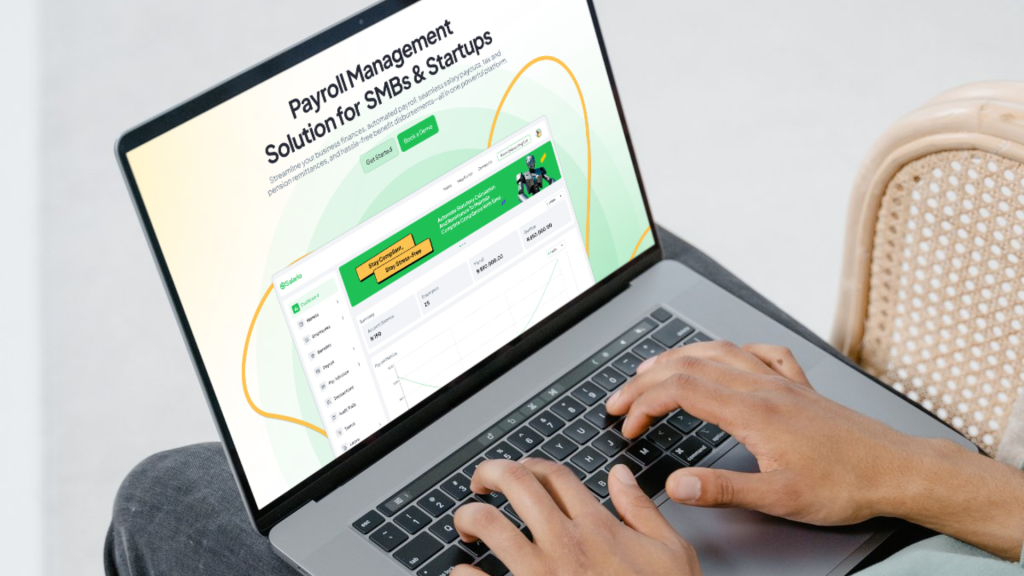
Raising in the US and spending in Nigeria are two different problems, and no single fix solves both. But once capital lands correctly in a Nigerian OpCo’s account, the next challenge is turning naira into accurate, compliant salary payments every month without recalculating PAYE, pension, and other deductions by hand each payday. Platforms like Salario automate that layer, handling statutory compliance automatically so a finance team is not tracking intercompany funding and manual tax tables at the same time. Self-service employee portals mean staff can check payslips and deductions without emailing the finance inbox, which matters when that inbox belongs to someone managing payroll from a different continent.
Salario is also building stablecoin payment options using USDC and USDT, aimed directly at the cross-border cost problem this article describes. For founders who raised in the US and now need to fund payroll operations in Nigeria without losing 6% of every transfer to fees, that kind of infrastructure closes a gap that traditional banking has left open for years.
Raising in the US will likely stay the easy half of this equation for a while. Spending in Nigeria does not have to stay the hard half. Book a free demo with Salario today and see how founders funding operations from abroad keep payroll compliant without micromanaging every naira. When the money moves as smoothly as it was raised, distance stops being the excuse.