
Chidi built his startup on Delaware paper and Silicon Valley money. His seed round closed in dollars, sitting in a US business account, and his six-person engineering team worked out of a small office in Yaba. Payroll was due on the 25th. He logged into his US bank, initiated a wire to his Nigerian company account, and waited. Four days later, the money still had not landed, and his HR lead was fielding calls from developers asking where their salaries were.
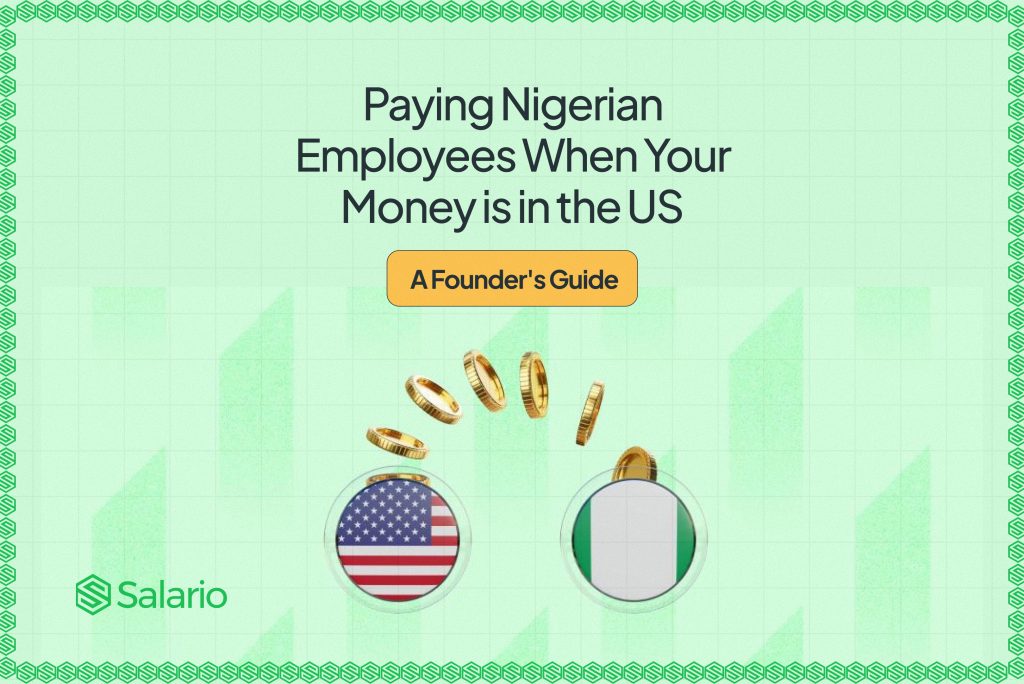
This is not a rare story. Paying Nigerian employees when your money is in the US is one of the most common operational headaches for founders who raised abroad but hire at home. According to World Bank data, Sub-Saharan Africa remains the most expensive region in the world to move money into, with average transfer costs running close to 8% of the amount sent. When that cost lands on payroll, a founder is not just losing money. They are losing time, trust, and sometimes compliance standing with Nigerian regulators. Raising in the US is easy. Spending it in Nigeria is a different problem entirely, and this guide walks through how to fix it properly.
Why This Problem Catches So Many Founders Off Guard
Most founders do not plan for this gap. They register a Delaware or UK entity because investors expect it, raise a round in dollars, and only think about the Nigerian side once they start hiring. By then, the company already has a bank account in the US holding the operating capital, and a Nigerian entity that needs naira every month to survive.
The mismatch is structural, not accidental. Your investors wired dollars into a US account. Your employees in Lagos or Abuja need naira in their bank accounts on a fixed date, tied to statutory deadlines like PAYE remittance by the 10th of the following month. Every wire transfer between those two systems passes through currency conversion, compliance checks, and banking delays that were never designed with monthly payroll in mind.
Founders who ignore this early usually discover it the hard way, during a payroll cycle that runs late or costs far more than expected.
The Real Cost of Getting This Wrong
A late payroll run does more damage than a single awkward conversation with your team. Pension remittances that miss their window attract a 2% monthly penalty under Nigerian pension law. PAYE deadlines carry similar consequences with the tax authorities. Beyond the fines, employees who do not trust their salary to arrive on time start looking elsewhere, and in a competitive hiring market for Nigerian tech and operations talent, that turnover is expensive to replace.

There is also a quieter cost: founder attention. Every month you spend manually chasing a wire transfer, calling your bank, or explaining a delay to your team is a month you are not spending on product or customers. Paying Nigerian employees should be a routine task, not a monthly fire drill.
Choosing the Right Structure First
Before fixing how money moves, founders need to get the structure right. Many diaspora-founded companies operate as a US HoldCo with a Nigerian OpCo underneath it, and this structure works well when set up correctly. Problems show up when founders treat the two entities informally, sending money as personal transfers or ad hoc loans instead of documented capital injections.
A properly structured US HoldCo, Nigerian OpCo relationship keeps your funding flow compliant with the Central Bank of Nigeria and protects your Certificate of Capital Importation (CCI), which you will need later if you ever want to repatriate profits or dividends. Skipping this step now creates paperwork problems that are far harder to untangle once the company has grown.
How to Actually Move the Money
Once the structure is right, the mechanics of the transfer matter just as much. Wiring dollars from a US business account into a Nigerian company account is not a single step. It usually involves converting through the Nigerian Foreign Exchange Market, routing through a correspondent bank, and satisfying documentation requirements tied to the CCI mentioned above.

Transferring capital from a US entity to a Nigerian company the right way protects you from FX losses and keeps your books clean for audits or future fundraising. Founders who skip the documentation step often find themselves unable to prove the source of funds later, which becomes a real problem if regulators or auditors ask questions.
A practical rule: move money on a schedule, not on demand. Waiting until the day before payroll to initiate a transfer guarantees stress and often guarantees a worse exchange rate. Founders who fund payroll operations a full banking week ahead of the payroll date give themselves room to absorb delays without missing a payment.
Budgeting for More Than Salaries
Paying Nigerian employees is not just about the number on their payslip. Statutory deductions add real cost on top of gross salary, including 10% employer pension contributions, NHF for qualifying employees, and NSITF at 1% of monthly payroll. Founders who budget only for take-home pay routinely run short when these obligations come due.
Understanding what an employee actually costs a Nigerian business before you convert dollars into naira prevents the common mistake of transferring exactly enough for salaries and then scrambling to cover statutory remittances separately. Build the full cost into a single monthly transfer instead of treating compliance costs as an afterthought.
Building a Repeatable Process
The founders who solve this problem permanently are the ones who stop treating each payroll cycle as a one-off transfer and start treating it as a process. That means a fixed monthly schedule for moving funds, a clear owner for initiating the transfer, and a system that tracks statutory deadlines automatically rather than relying on someone’s memory.
Manual spreadsheets and ad hoc bank transfers work for a five-person team. They stop working once you have ten or fifteen employees across different roles, each with different deduction rules and pay dates. At that point, the manual process itself becomes the risk.
Making Payroll Simple, Even From Abroad
Platforms like Salario were built for exactly this situation. Salario automates Nigerian payroll compliance, calculating PAYE, pension, NHF, and NSITF correctly every cycle, and gives founders managing teams from the US or UK a self-service portal where employees can see their payslips without a single email exchange. With Salario’s upcoming stablecoin payment options, founders will also be able to move USDC or USDT directly into payroll funding, cutting out some of the delay and FX friction that traditional bank wires carry.
Paying Nigerian employees from abroad does not have to mean late salaries, compliance penalties, or a founder stuck refreshing a banking app. Book a free demo with Salario today and see how diaspora founders are running compliant, on-time payroll for their Nigerian teams without the stress of chasing wire transfers. When payroll works perfectly, distance stops mattering.