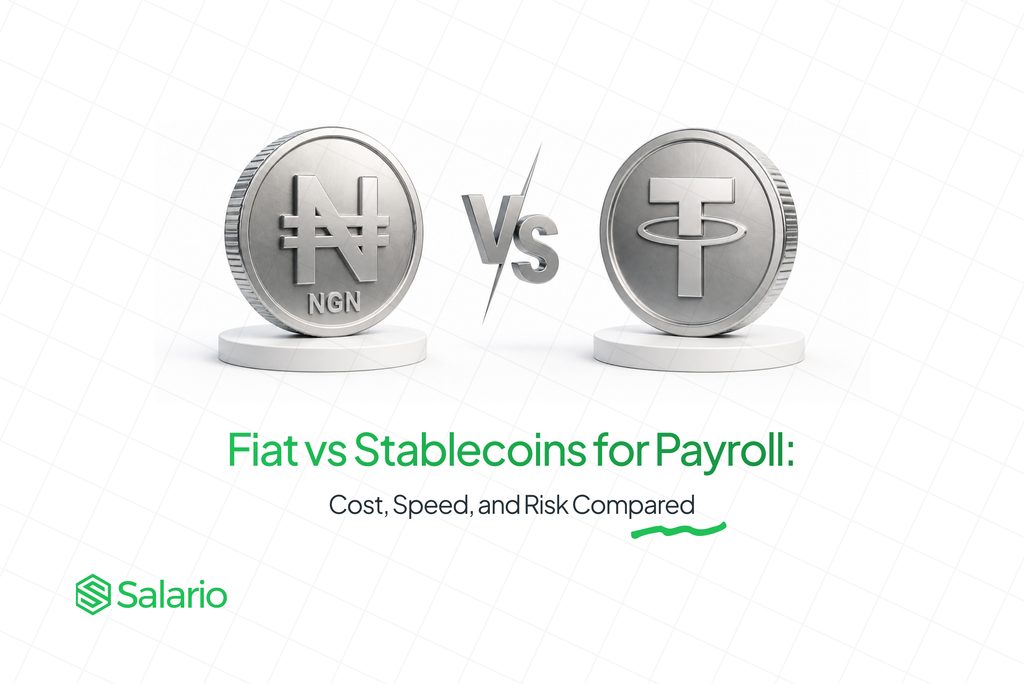
Looking for how stablecoins for payroll compare with traditional fiat options in terms of cost, speed, and risk? This article is for you. Many business owners running operations or managing teams for payroll in Nigeria face ongoing frustrations with traditional payment methods. High fees, slow international transfers, currency volatility, and banking limitations create uncertainty around timely salary payments and overall cash flow management.
In this article we break down the key differences between fiat and stablecoins for payroll, examine cost, speed, and risk side by side, with practical insights relevant to businesses handling payroll in Nigeria. Let’s dive in!
Why Choosing the Right Payroll Payment Method Matters for Businesses Handling Payroll in Nigeria
Business owners in Nigeria, especially those operating from abroad or managing distributed teams, encounter unique hurdles when it comes to processing salaries reliably. The naira often experiences significant swings in value, which can erode the real worth of payments between the time funds are prepared and when employees receive them. Foreign exchange restrictions add another layer of difficulty, as accessing sufficient dollars or completing international transfers frequently involves lengthy approval processes and limited availability.

Banking systems typically operate only during standard business hours, meaning payments initiated late in the day or over weekends can face delays of several days before clearing. These bottlenecks not only disrupt cash flow but also create stress for team members who depend on consistent income to meet their daily needs.
Compliance becomes more complicated too, as manual tracking of payments across borders increases the chance of errors in documentation or reporting. In such an environment, the method chosen for moving payroll funds directly influences how smoothly the entire operation runs and how much peace of mind the business owner can enjoy. This is precisely why many are exploring alternatives like stablecoins for payroll as they seek more efficient ways to handle payroll in Nigeria while addressing these persistent challenges.
Fiat vs Stablecoins for Payroll
Fiat
Traditional fiat payments rely on established banking channels to move funds, whether in naira for local staff or in foreign currencies for international transfers. Funds travel through banks, clearing systems, and sometimes multiple intermediary institutions, following set schedules and regulatory procedures that govern each step of the process. This familiar system has supported businesses for decades but often comes with built-in limitations tied to physical banking infrastructure and currency controls.
Stablecoins

Stablecoins for payroll, on the other hand, represent a modern approach that uses digital assets built to maintain a steady value, most commonly pegged to the US dollar. These operate on blockchain technology, allowing value to move directly between digital wallets with minimal reliance on traditional banking rails. For businesses managing payroll in Nigeria, stablecoins for payroll offer a compelling option particularly when dealing with cross-border payments or teams that include international contractors and remote workers who value receiving funds in a form that preserves purchasing power across borders.
Fiat vs Stablecoins for Payroll: Cost, Speed, and Risk Compared
Cost Comparison
Fiat
Traditional fiat transfers often accumulate expenses through several layers that add up noticeably over repeated payroll cycles. These accumulated costs, combined with spreads between buying and selling rates for foreign currency, can increase the total amount required to deliver the intended net salary to employees. For businesses handling payroll in Nigeria, especially those sending funds from abroad or paying contractors in different countries, these repeated expenses create a steady pressure on monthly budgets that reduces the resources available for other important areas such as business expansion or additional employee benefits.
Stablecoins
In contrast, stablecoins for payroll typically involve far fewer intermediaries because the transfer happens directly on the blockchain network. This streamlined path reduces the number of parties taking a portion of the funds, resulting in generally lower overall transaction expenses. For business owners managing distributed teams or international payouts alongside local Nigerian staff, this difference allows more of the allocated payroll budget to reach employees as intended rather than being consumed along the way. Many businesses discover that the cost structure of stablecoins for payroll makes it easier to maintain competitive compensation packages while preserving healthier cash flow throughout the year.

Speed Comparison
Fiat
Fiat-based payroll payments depend heavily on the schedules and operational windows of traditional banking systems. Transfers may only process during business hours, and any request submitted during weekends, or holidays often waits until the next available banking day. In Nigeria, additional steps such as foreign exchange approvals or liquidity checks at various institutions can extend the timeline further, sometimes turning what should be a straightforward salary disbursement into a process that spans several days. These delays create uncertainty for both the business and its employees, as teams wait to access funds needed for expenses, which can affect daily planning and overall satisfaction.
Stablecoins
Stablecoins for payroll fundamentally change this dynamic by enabling transfers that settle in a matter of seconds or minutes and operate around the clock without regard for banking hours or weekends. This rapid delivery improves the employee experience significantly, as workers gain prompt access to their earnings and can plan their finances with greater certainty. For business owners handling payroll in Nigeria who manage remote or international team members, the speed advantage of stablecoins for payroll reduces the need for constant administrative follow-ups and helps maintain stronger relationships with talent who expect modern and responsive payment experiences.
Risk Comparison
Fiat
Fiat carries exposure to several forms of uncertainty that can affect payroll reliability. Local currency volatility can diminish the real value of salaries between the time they are prepared and when they are finally received by employees. Banking restrictions and limited transparency in how funds move through multiple institutions make it harder to track exactly where delays or issues occur. Manual reconciliation processes increase the chance of errors, and reliance on various banks introduces counterparty risks if any part of the chain encounters difficulties.
Stablecoins
Stablecoins for payroll offer meaningful advantages in reducing certain volatility risks because their value remains closely tied to a stable reference currency, helping preserve the purchasing power even when local currency conditions are challenging. At the same time, important considerations remain, such as the need for secure wallet management, adherence to evolving regulatory guidelines around digital assets, and reliable processes for moving between stablecoins and local currency when required. With proper implementation using trusted custody solutions and compliance tools, many of these factors can be effectively managed. For businesses seeking reliable payroll in Nigeria, stablecoins for payroll can deliver stronger predictability and control in key areas while requiring thoughtful attention to security and regulatory alignment.

Why Many Businesses Are Tilting Towards Stablecoins for Payroll
Businesses are increasingly choosing stablecoins for payroll for several compelling reasons that directly solve common challenges in managing payroll in Nigeria.
Lower Overall Transaction Costs
Stablecoins for payroll reduce the number of intermediaries involved in transfers, which keeps expenses lower compared to traditional banking layers. This efficiency helps business owners allocate more of the payroll budget to actual employee compensation rather than fees, supporting healthier cash flow when handling both local and cross-border payments.
Faster Payment Delivery
With stablecoins for payroll, funds can settle in seconds or minutes and are available around the clock. This eliminates the delays caused by banking hours and approval processes, allowing employees to receive their salaries promptly and plan their finances with greater confidence, which improves satisfaction and reduces administrative follow-up for owners.
Improved Value Preservation
The stable value peg of stablecoins helps protect the real worth of salaries against local currency fluctuations. Employees receive compensation that maintains more consistent purchasing power, giving team members greater financial security and making stablecoins for payroll an attractive option for businesses operating in volatile environments.
Greater Transparency and Oversight
Blockchain records provide a clear, immutable trail of every transaction. Remote business owners gain better visibility into when and how payments are made, building trust with employees and simplifying reconciliation without the opacity often found in traditional fiat transfers.
Alignment with Modern Workforces
Stablecoins for payroll support flexible payment options that appeal to international contractors, freelancers, and distributed teams. This helps businesses attract and retain talent who expect quick and efficient compensation methods, making it easier to manage payroll in Nigeria alongside global operations.

Enhanced Operational Efficiency
By reducing delays and manual interventions, stablecoins for payroll free up time and resources that would otherwise be spent chasing payments or resolving issues. This allows business owners to focus more on business growth while maintaining reliable payroll processes.
Conclusion
Comparing fiat and stablecoins for payroll reveals clear trade-offs in cost, speed, and risk. Traditional fiat methods offer familiarity but often involve higher expenses, slower processing, and greater exposure to delays and volatility. Stablecoins for payroll bring compelling strengths in efficiency, speed, and value preservation, which is why many businesses are tilting toward this modern approach for payroll in Nigeria. Salario stands out as the ideal partner with seamless payroll automation, deep local compliance, and employee self-service features.
With stablecoins integration in progress to support seamless USD-pegged payouts while maintaining full regulatory adherence. This combination makes Salario the best choice for business owners looking to optimize payroll with confidence. Book a demo with our team today to see how seamless payroll is with Salario! Choose Salario and take full control of your payroll with confidence!