
The banking system closes on Friday evening. Your contractor in London needs payment urgently. You initiate a wire transfer that will take a minimum of three days to arrive. Your bank charges $45 in fees. The receiving bank adds another $25. Foreign exchange markup eats another 3% before the money lands. By Tuesday, your $5,000 payment becomes $4,700 in the contractor’s account, five days late. This problem repeats monthly for businesses paying international teams.
Stablecoin payroll solves this entirely. Send digital dollars that arrive in seconds, cost pennies in fees, and maintain exact value without forex volatility. No banks, no delays, no hidden charges. Just instant, accurate payments to anyone, anywhere, at any time. Traditional international payroll hasn’t changed in decades. Stablecoin payroll changes everything.
What Is Stablecoin Payroll?
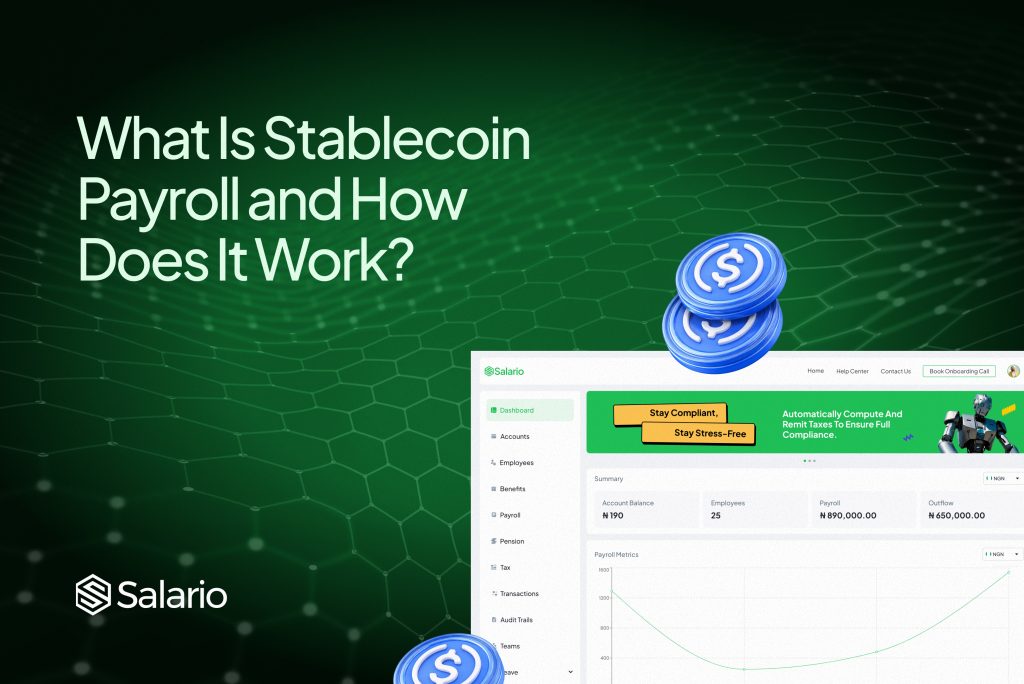
Stablecoin payroll is a modern payment method in which companies pay employees or contractors using stablecoins, digital currencies designed to maintain stable value by pegging 1:1 to traditional currencies like the US dollar. Think of it as sending digital dollars over the internet: faster, cheaper, and borderless, without cryptocurrency volatility.
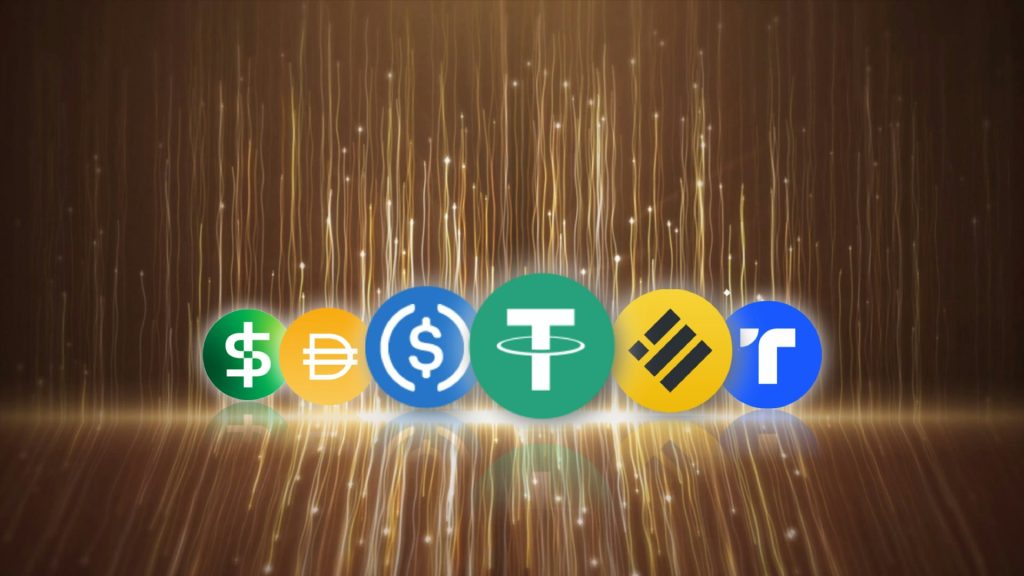
Regulated financial entities issue stablecoins like USDC, USDT, and PYUSD, backed by real-world reserves held in cash or short-term US Treasury securities. For companies, stablecoin payroll combines the trust of traditional finance with the efficiency of decentralized blockchain networks.
This method is fundamentally different from traditional crypto payroll. Paying employees in Bitcoin or Ethereum exposes them to unpredictable swings in value. A $5,000 salary could become $4,200 overnight. That volatility makes volatile cryptocurrencies impractical for payroll operations.
Stablecoin payroll is value-stable and easily convertible to fiat currencies. It integrates with existing payroll systems through APIs, which allow different software applications to communicate with each other. It provides compliance-ready documentation in fiat equivalents for accounting and tax purposes. It’s not about crypto pay. It’s about using regulated digital dollars to make payroll more efficient and accessible for global teams.
How Stablecoin Payroll Works
The stablecoin payroll process is straightforward and integrates seamlessly with existing payroll infrastructure. Here’s exactly how it works step by step.
Companies fund their payroll account with fiat currency or stablecoins. Most platforms accept both USD bank transfers and direct stablecoin deposits. If you fund with USD, the platform converts it to stablecoins like USDC automatically. If you already hold USDC, you deposit it directly.
Payroll managers calculate salaries exactly as before, using their existing systems. Nothing changes in how you determine compensation, deductions, or net pay. The difference is the payout method, not the calculation method. Platforms like Salario will integrate stablecoin payroll options directly into the dashboard where you already process payments.
When payroll runs, employees choose how they want to receive payment. Options typically include stablecoins like USDC or USDT sent to their crypto wallet, fiat currency deposited to their bank account in local currency, or a hybrid split between stablecoins and fiat.
The platform handles currency conversion automatically if employees choose fiat. USDC converts to naira, pounds, euros, or any of 90-plus supported currencies at real-time exchange rates. Employees receive exactly what they’re owed in their preferred currency.
Payments settle within seconds on blockchain networks. Unlike wire transfers that take three to five business days, stablecoin transactions complete in minutes. Employees confirm receipt immediately. Finance teams close payroll cycles faster with real-time settlement confirmation.
Compliance documentation is generated automatically. Every transaction creates audit trails showing amounts, exchange rates, timestamps, and recipient information. Tax withholdings, statutory deductions, and compliance reports are formatted correctly for local regulations.
For Nigerian businesses, this means paying international contractors without navigating complex forex regulations or bank intermediaries. It means employees in Lagos can receive stable dollar-denominated payments instantly. It means cross-border payroll becomes as simple as domestic payroll.
Key Benefits of Stablecoin Payroll
Stablecoin payroll delivers measurable advantages that transform how businesses handle international payments.
Speed and Instant Settlement
Stablecoin payroll transforms payment timelines from days to seconds. Traditional international wire transfers often take three to five business days to clear, especially when intermediaries and time zones are involved. In contrast, stablecoin payments settle within seconds, operating 24/7, including weekends and public holidays. Employees and contractors receive their earnings almost immediately, and finance teams can close payroll cycles in minutes instead of stretching them across several days. The result is faster cash flow, fewer delays, and a more agile payroll operation.
Dramatic Cost Savings
International payroll is notoriously expensive, with wire transfer charges and foreign exchange spreads consuming between 3% and 6% of each payment. Stablecoin transactions significantly reduce these costs, typically charging under 1% in fees and often just a few dollars per transfer. Many companies report saving more than 60% on average payroll costs after switching to stablecoins. For a business paying $100,000 monthly to international workers, this translates to savings of $3,000 to $5,000 every month, which can be reinvested into growth.
Currency Stability for Employees
For workers in high-inflation economies, receiving payments in local currency can mean watching their earnings lose value rapidly. Stablecoin payroll solves this by delivering dollar-denominated payments to employees in countries such as Nigeria, Argentina, Venezuela, and Turkey. Their income maintains its value rather than eroding due to inflation or sudden currency devaluation. Employees also gain control over when and how they convert their earnings into local currency, helping them avoid forced conversions at unfavorable exchange rates.
Financial Inclusion and Access
Stablecoin payroll expands access to global income opportunities for individuals who do not have traditional bank accounts. Instead of requiring local banking infrastructure, payments can be sent directly to a crypto wallet. This provides opportunities for millions of unbanked workers to engage in the global economy. All that is required is a smartphone and an internet connection, dramatically lowering the barrier to entry for cross-border employment.
Transparency and Trust
Every stablecoin transaction is recorded on the blockchain, creating an immutable and time-stamped audit trail. Employees can independently verify that payments have been made, reducing uncertainty and disputes. Employers, on the other hand, can demonstrate compliance with clear transaction records. By referencing a transparent and tamper-resistant transaction history, both parties can resolve disputes faster when questions arise.
Employee Flexibility and Control
Stablecoin payroll introduces a level of flexibility that traditional systems rarely offer. Employees can choose to receive their compensation fully in stablecoins, entirely in fiat currency, or as a hybrid split between both. They decide when to convert their funds and into which currency, giving them greater financial autonomy. This flexibility is particularly valuable for workers managing obligations across multiple currencies and jurisdictions, ultimately improving satisfaction and trust.
Global Reach Without Barriers
With stablecoin payroll, companies can pay talent anywhere in the world without setting up local entities or navigating complex banking relationships in each country. Contractors across more than 190 countries can receive payments in their preferred format. This eliminates geographical constraints from hiring choices, allowing businesses to tap into a truly worldwide talent pool without encountering traditional financial obstacles.
Simplified Compliance
Modern stablecoin payroll platforms integrate compliance features that automatically handle tax withholding, labor regulations, and reporting requirements across different jurisdictions. What once required multiple country-specific payroll providers can now run through a single, unified system. This streamlines operations, reduces administrative overhead, and minimizes the risk of costly compliance errors.
Challenges and Considerations
Stablecoin payroll solves major problems, but businesses must understand potential challenges before implementation.
Regulatory Uncertainty

Regulatory uncertainty remains in many jurisdictions. Stablecoin regulations vary globally and are still evolving. The US GENIUS Act signed in July 2025 established clearer frameworks, but rules continue developing. Businesses must work with platforms that monitor regulatory changes and maintain compliance.
Depeg risks
Depeg risk exists, though major stablecoins have proven resilient. USDC and USDT historically hold close to $1, recovering quickly from minor fluctuations. In March 2023, USDC temporarily lost its peg when Silicon Valley Bank collapsed. The peg was restored within four days. Businesses should stick to well-established stablecoins like USDC and USDT.
Lack of Employee education
Employee education is necessary. Not everyone understands cryptocurrency or blockchain technology. Companies must explain how stablecoin payroll works, how to set up wallets, and how to convert to fiat currency. Good platforms provide educational resources and support.
Secure wallet management
Wallet management creates new responsibilities. Employees receiving stablecoins must secure their crypto wallets properly. Lost wallet credentials mean lost funds with no recovery option. Platforms increasingly offer custodial solutions where the provider manages wallets, reducing this risk.
Tax implications
Tax implications require attention. Even though stablecoins maintain stable value, they may be treated as property in some tax jurisdictions. Businesses need clear guidance on how to handle tax withholding and reporting for stablecoin payments.
These challenges are manageable with proper planning and the right platform partner. The benefits far outweigh the considerations for businesses operating globally.
The Future of Stablecoin Payroll for Nigerian Businesses
Nigerian businesses face unique challenges with cross-border payments. Forex regulations, banking intermediaries, currency volatility, and high transaction costs make international payroll complex and expensive. Stablecoin payroll directly addresses every one of these pain points.
For Nigerian companies hiring international talent, stablecoin payroll removes forex barriers. Pay contractors in London, developers in Lagos, and designers in Nairobi using the same system. No currency conversions, no wire transfer delays, and no hidden bank fees.
For Nigerian employees receiving international payments, stablecoin payroll provides stability. Receive dollar-denominated income that doesn’t fluctuate with naira volatility. Choose when to convert to local currency. Access earnings through mobile wallets even without traditional bank accounts.
For diaspora Nigerians running businesses in Nigeria, stablecoin payroll simplifies operations. Fund payroll from your UK or US bank account. Pay your Lagos team instantly without navigating complex remittance channels.
Salario recognizes that the future of payroll is borderless, instant, and efficient. That’s why we’re introducing stablecoin payment options for cross-border transactions. Soon, Salario customers will be able to pay international contractors and receive international payments using USDC and other major stablecoins, all from the same platform where you already manage Nigerian payroll compliance.
This integration brings global payroll capabilities to Nigerian businesses without complexity. Process domestic PAYE, pensions, and statutory deductions alongside international stablecoin payments. This integration streamlines all processes into a single dashboard, ensuring full compliance and complete automation.
Conclusion
Stablecoin payroll represents the most significant advancement in global payments infrastructure in decades. It eliminates delays, slashes costs, expands access, and gives employees control over how they receive and manage earnings.
Traditional cross-border payroll is broken. Three to five-day settlement times, fees consuming 3% to 6% of every payment, forex volatility, and complex compliance requirements create friction at every step. Stablecoin payroll removes all of it. Instant settlement, minimal fees, stable value, and automated compliance make global payroll as simple as domestic payroll.
Nigerian businesses ready to compete globally need payroll infrastructure that works at internet speed. Salario is building that infrastructure. Our platform already automates Nigerian payroll compliance perfectly. Soon, we’ll add stablecoin payment capabilities for cross-border transactions, giving you one system for all your payroll needs. Ready to prepare for the future of payroll? Book a free demo with Salario today and see how our platform handles Nigerian compliance effortlessly. When we launch stablecoin payment options, you’ll be ready to pay anyone, anywhere, instantly. The future of work is global. Your payroll should be, too.