A missing signature on an attendance sheet can delay payroll, trigger disputes, and create unnecessary tension between employees and management. What begins as a simple daily routine often becomes a source of errors, lost records, and inaccurate pay calculations. Effective attendance management is no longer just about knowing who showed up. It is about creating reliable records that support fair pay, accountability, and smooth operations.
In this article, we compare manual attendance sheets with digital attendance systems and show why better attendance management matters for growing businesses. Let’s dive in!
Manual Attendance Sheets vs Digital Attendance Systems
Manual attendance sheets are the traditional paper-based method of recording employee presence. Workers sign a register, fill in arrival and departure times, or mark their names on a printed sheet. Supervisors later collect and review these records, often transferring the information into spreadsheets for payroll. While this method is familiar and requires little technology, it depends heavily on human accuracy and honesty. In practice, this approach often struggles to support consistent attendance management as teams grow.

Digital attendance systems, on the other hand, use technology to capture and store attendance data automatically. These systems may include biometric devices such as fingerprint or facial recognition, mobile apps with GPS verification, or software platforms that record clock-ins in real time. The data is stored digitally and can be linked directly to payroll and reporting tools. This creates a more consistent and transparent approach to attendance management and reduces reliance on paper records.
Challenges of Manual Attendance Sheets
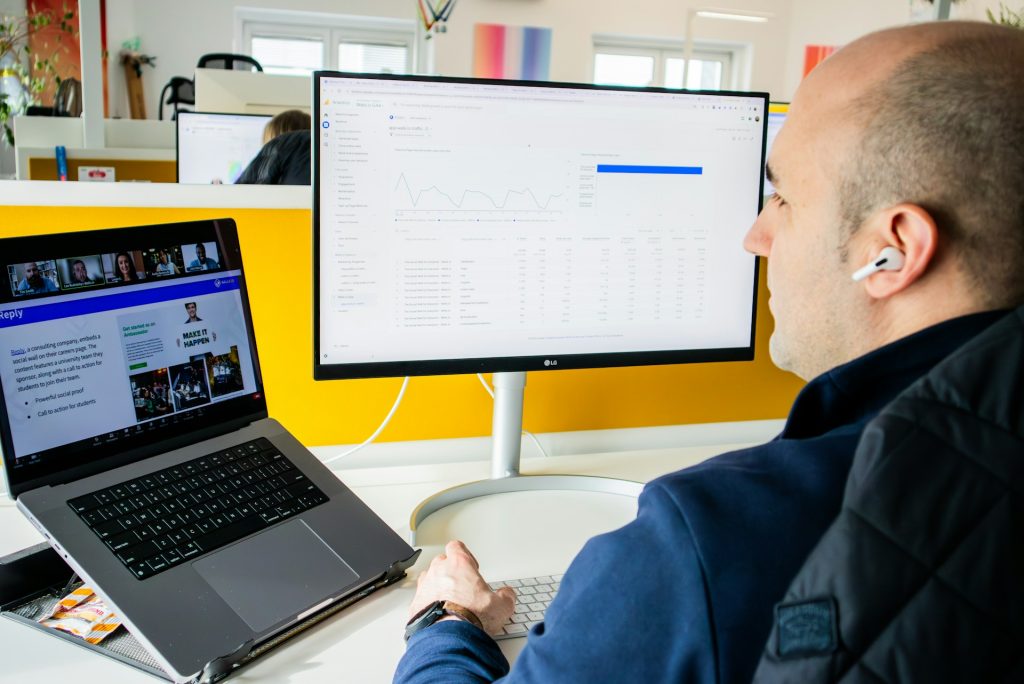
Manual attendance sheets may appear straightforward, but they come with several practical problems that become more noticeable as a business grows. These challenges often affect both daily operations and the accuracy of payroll, making reliable attendance management harder to achieve.
Human error and inaccurate records
Paper sheets rely on employees correctly writing their times and supervisors correctly interpreting the entries. Mistakes such as wrong times, missing signatures, or unclear handwriting are common. Over time, these small errors reduce the reliability of attendance management and make it harder to trust the data used for calculating pay.
Time theft
In manual systems, it is easier for one employee to sign in for another. This practice, often called buddy punching, leads to payment for hours that were not actually worked. Without strong controls, businesses lose money and find it difficult to maintain fair attendance management across the team.
Lost or damaged records
Paper sheets can be misplaced, damaged by water or handling, or simply discarded too early. When records disappear, disputes become harder to resolve and historical data is lost. This creates gaps in attendance management that can cause problems during audits or internal reviews.
Increased administrative burden

HR and supervisors spend significant time collecting sheets, checking entries, and transferring information into payroll systems. This manual work increases the chance of further errors and takes attention away from more valuable tasks. Effective attendance management should reduce work, not create more of it.
Disputes over hours worked
When records are unclear or incomplete, disagreements between employees and management become more frequent. These disputes damage trust and take time to resolve. Strong attendance management depends on records that both parties can rely on.
Key Differences Between Manual Attendance Sheets and Digital Attendance Systems
The gap between manual and digital approaches becomes clear when you compare how each handles accuracy, speed, visibility, and long-term control. Understanding these differences helps businesses make better decisions about attendance management.
Accuracy of records
Manual sheets depend on human input and are prone to mistakes or manipulation. Digital systems capture data automatically through biometrics, mobile apps, or secure login methods, which significantly reduces errors and improves the overall quality of attendance management.
Speed and efficiency
Collecting, checking, and transferring paper records takes time every day or week. Digital systems record attendance instantly and make the information available immediately for review or payroll processing. This speed supports smoother attendance management across teams.
Visibility and real-time access

With paper sheets, managers often only see attendance data after it has been collected and reviewed. Digital systems provide real-time visibility, allowing leaders to monitor presence, late arrivals, and absences as they happen. This level of insight strengthens day-to-day attendance management.
Integration with payroll
Manual records usually require extra steps before they can be used for salary calculations. Digital attendance systems can connect directly with payroll software, reducing re-entry of data and improving accuracy. This integration is one of the strongest advantages of modern attendance management.
Scalability
As a company adds more employees or locations, paper-based systems become harder to control. Digital platforms handle growth more easily and maintain consistent standards of attendance management across different teams and sites.
What Makes Digital Attendance Systems a Better Choice?
Digital attendance systems offer clear advantages that go beyond convenience. For businesses that want reliable records and fewer payroll issues, they provide a stronger foundation for effective attendance management.
Higher accuracy and fewer disputes
Automatic data capture reduces the mistakes and manipulation that often occur with paper sheets. When records are clear and consistent, disagreements over hours worked decline. This creates a fairer environment and supports better attendance management overall.
Stronger link to payroll accuracy
Because digital systems can feed attendance data directly into payroll processes, the risk of calculation errors drops. Employees are more likely to be paid correctly for the hours they worked, which builds trust and reduces the need for constant corrections in attendance management.
Real-time visibility for managers
Leaders no longer have to wait until the end of the week or month to understand attendance patterns. Instant access to data allows faster decisions and better oversight, which is especially valuable for growing teams that need reliable attendance management.
Reduced administrative workload
HR and supervisors spend less time chasing paper, checking signatures, and transferring numbers. The time saved can be redirected toward more strategic work while still maintaining strong attendance management
Better support for compliance and audits
Digital records are easier to store, search, and present when needed. Clear historical data helps businesses respond confidently during internal reviews or external audits and strengthens overall attendance management.
How Salario Supports Better Attendance Management
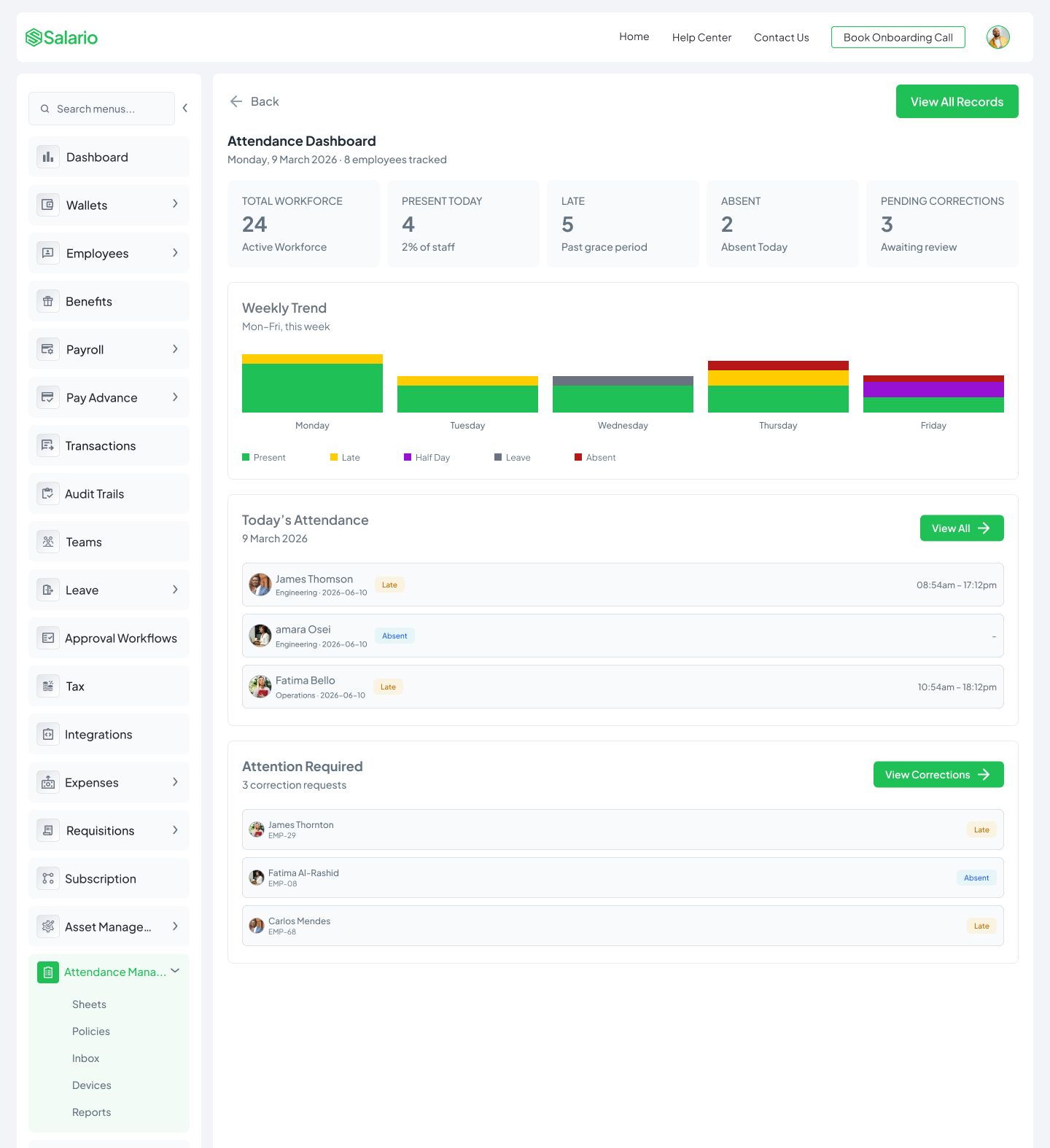
Salario helps businesses move away from the limitations of manual processes by linking attendance tracking with accurate and efficient payroll operations. The goal is to make attendance management more reliable and less time-consuming. Salario offers the best attendance management software that makes the whole process seamless.
Seamless connection between attendance and payroll
Salario is designed so that attendance data can support accurate salary calculations. This reduces the need for manual transfers and helps ensure that employees are paid based on reliable records, improving the quality of attendance management.
Real-time visibility and control
Managers and business owners gain clearer insight into attendance patterns. This visibility supports better day-to-day decisions and strengthens overall attendance management across the organisation.
Reduced errors and disputes
By moving away from paper-based methods, businesses can lower the risk of missing entries, unclear records, and disagreements over hours worked. Cleaner data leads to smoother payroll cycles and more trustworthy attendance management.
Support for growing teams
As the organisation expands, Salario helps maintain consistent standards of attendance management without adding heavy administrative work. The system scales with the business rather than becoming harder to control.
Practical automation
Automation reduces repetitive tasks involved in tracking and processing attendance. This allows HR and finance teams to focus on higher-value activities while still maintaining accurate records and effective attendance management.
Conclusion
Manual attendance sheets may feel familiar, but they often create more problems than they solve. Digital attendance systems offer a clearer, more reliable approach to attendance management by improving accuracy, visibility, and integration with payroll. For businesses that want fewer disputes and more trustworthy records, moving to a digital system is a practical step forward. Salario supports this shift by helping organisations manage attendance in a way that connects directly to accurate and efficient payroll processes. Ready to improve your attendance management and reduce payroll errors? Book a demo with our team today. Better attendance records lead to fairer pay and smoother operations!