
Looking for how attendance tracking affects payroll Accuracy? Many business owners in Nigeria discover the hard way how much attendance tracking influences payroll accuracy. A small mistake in recording working hours can lead to overpayments, underpayments, compliance issues, and even disputes with employees. For companies trying to maintain tight budgets and stay compliant, getting attendance tracking right is essential.
In this article, we explore the strong connection between attendance tracking and payroll accuracy, the common problems caused by poor systems, and practical ways to improve both. Let’s dive in!
Why Accurate Attendance Tracking Matters for Payroll
Attendance tracking serves as the foundation for reliable payroll processing. When attendance data is accurate, payroll calculations become straightforward and trustworthy. When it is flawed, errors spiral through the entire system, affecting everything from salary payments to statutory deductions.

For businesses in Nigeria, where compliance requirements are strict and margins can be tight, strong attendance tracking directly supports payroll accuracy and helps prevent costly mistakes. Understanding this relationship helps business owners or HR managers make better decisions about tools and processes.
Common Problems Caused by Poor Attendance Tracking
Weak attendance tracking creates several serious issues that directly harm payroll accuracy and business operations. Many companies still rely on manual methods or disconnected systems, which often lead to inaccuracies that become expensive over time.
Overpayments and Underpayments
Inaccurate attendance records frequently result in employees being paid for hours they did not work or not receiving pay for hours they actually completed. These discrepancies create immediate financial losses and can damage trust between the company and its workforce. Correcting them later requires additional time and resources, further increasing operational costs.
Compliance and Legal Risks

Nigerian regulations require accurate records for minimum wage, overtime, and statutory contributions. Poor attendance tracking makes it difficult to prove compliance during audits or inspections. This exposes businesses to penalties, fines, and potential legal disputes that could have been avoided with reliable systems.
Employee Disputes and Low Trust
When employees notice inconsistencies between their actual hours worked and their payslips, it leads to dissatisfaction and formal complaints. These disputes consume HR time and erode confidence in the payroll process, ultimately affecting morale and productivity.
Increased Administrative Workload

HR and finance teams spend excessive hours reconciling attendance data with payroll records when the two systems do not communicate effectively. This manual effort raises operational costs and diverts attention from more strategic activities.
Cash Flow and Budgeting Challenges
Unreliable attendance data makes it difficult to forecast payroll expenses accurately. Unexpected adjustments due to errors can disrupt cash flow planning and create budget shortfalls at critical times.
How Modern Attendance Tracking Improves Payroll Accuracy
Modern attendance tracking solutions, when properly implemented, transform payroll accuracy by providing reliable, real time data. These systems reduce human error and create a seamless connection between attendance records and payroll processing. Here are the key ways effective attendance tracking enhances payroll accuracy.
Real Time Data Capture
Advanced systems capture attendance instantly through biometric, GPS, or mobile clock-in features. This eliminates reliance on manual timesheets and ensures payroll calculations are based on actual, verified working hours.
Automated Integration
When attendance tracking integrates directly with payroll software, data flows automatically without manual transfer. This integration minimizes errors and ensures every hour worked is correctly reflected in salary calculations and deductions.
Clear Audit Trails
Modern solutions maintain detailed, tamper-proof records of attendance. These records make it much easier to verify payroll calculations during audits and resolve any questions from employees or regulators.
Reduced Manual Intervention
By automating data collection and synchronization, businesses significantly cut down on manual processes. This reduction in manual steps leads to higher consistency and better overall payroll accuracy.
Best Practices for Effective Attendance and Payroll Integration
To achieve strong payroll accuracy, businesses can follow these proven practices when implementing attendance tracking systems. These steps help create a reliable foundation for payroll processing.
Choose Integrated Systems
Select attendance tracking tools that connect seamlessly with your payroll platform. Integration ensures data moves automatically and reduces the chance of discrepancies between the two systems.
Train Employees and Managers Properly
Provide clear training on how to use the attendance system correctly. When everyone understands the process, data quality improves and payroll accuracy increases.
Set Clear Policies
Define attendance rules, overtime procedures, and approval workflows upfront. Clear policies reduce confusion and ensure consistent application across the organization.
Monitor and Review Regularly
Regularly review attendance data and payroll reports to catch and correct issues early. Ongoing monitoring helps maintain high levels of payroll accuracy over time.
How Salario Helps You Achieve Accurate Payroll Through Better Attendance Tracking
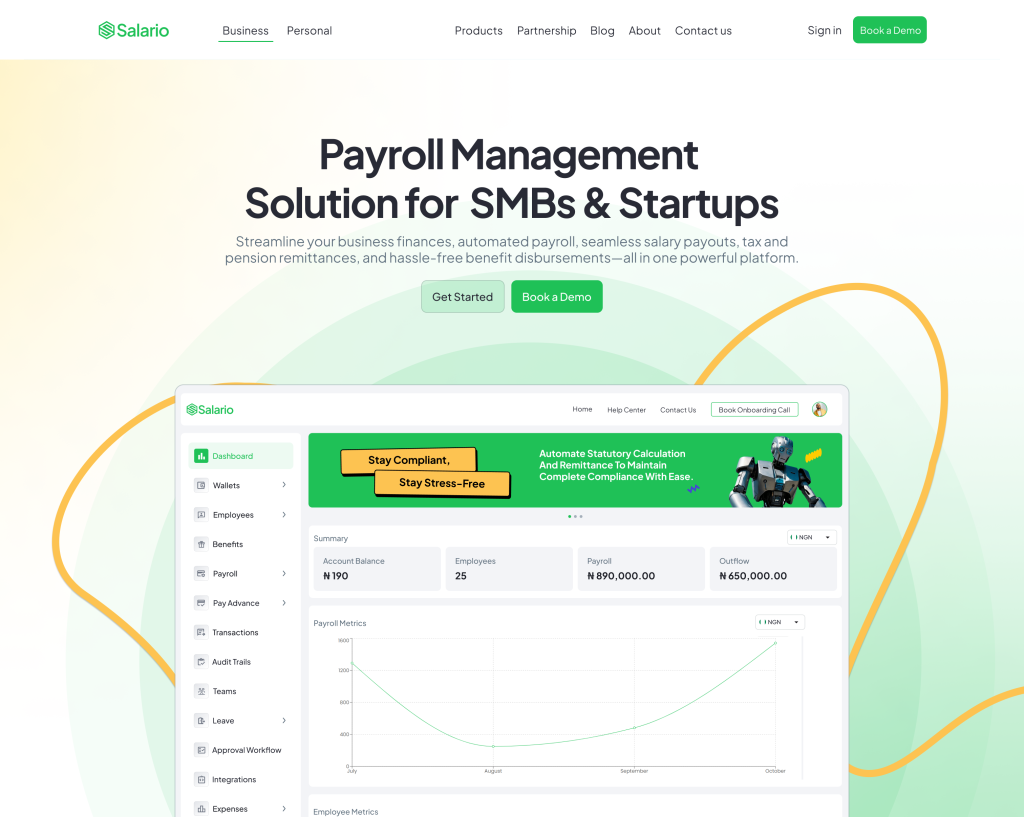
Salario offers powerful tools that connect attendance tracking with payroll processing to deliver exceptional accuracy and efficiency for Nigerian businesses.
Seamless Attendance and Payroll Integration
Salario integrates attendance data directly into the payroll system, ensuring every recorded hour flows automatically into salary calculations. This integration eliminates manual errors and supports high payroll accuracy.
Automated Calculations and Deductions
The platform automatically computes salaries, overtime, and statutory deductions based on verified attendance records. This automation reduces mistakes and saves significant administrative time.
Real Time Visibility
Business owners and HR teams gain clear, real time access to attendance and payroll information. This visibility makes it easy to spot discrepancies and maintain strong payroll accuracy.
Deep Local Compliance
Salario handles Nigerian regulatory requirements automatically, including accurate tracking of working hours for compliance purposes. This built-in support helps businesses avoid penalties while maintaining reliable payroll records.
Employee Self Service Features

Employees can view their attendance records and payslips through a convenient portal. This transparency reduces disputes and builds greater confidence in the payroll process.
Conclusion
Attendance tracking has a direct and powerful effect on payroll accuracy. When done well, it creates a foundation for reliable payments, regulatory compliance, and employee trust. When neglected, it leads to costly errors, disputes, and operational headaches. By implementing modern attendance tracking systems and integrating them properly with payroll, businesses can significantly improve accuracy while reducing administrative burden. Salario makes this process straightforward with powerful automation, seamless integration, and deep local expertise. Investing in better attendance tracking is ultimately an investment in more accurate payroll and a stronger, more confident business.
Ready to improve your attendance tracking and achieve better payroll accuracy? Book a demo with our team today and discover how our attendance tracking feature can help your business achieve payroll accuracy.