
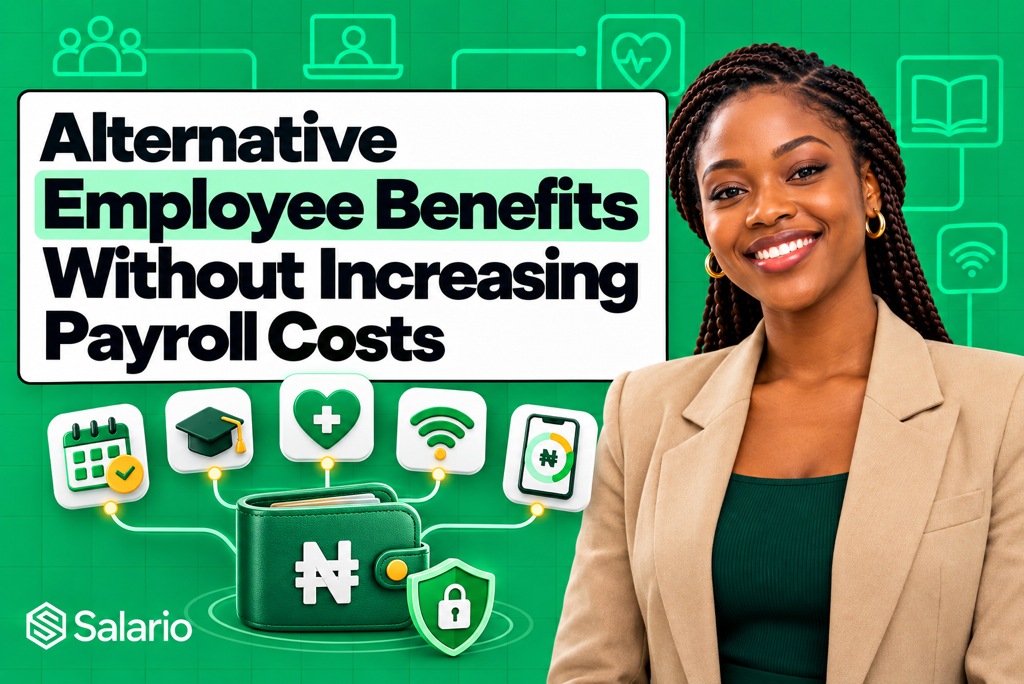
Alternative employee benefits without increasing payroll costs can help businesses support, motivate and retain employees when permanent salary increases are not financially sustainable.
Employees naturally want competitive salaries. However, salary is only one part of the overall employee experience. Flexibility, recognition, financial security, career development and access to useful workplace benefits can also influence how employees feel about their employer.
For Nigerian startups and small businesses, increasing every employee’s salary may create a recurring expense the company cannot comfortably maintain. A ₦30,000 monthly raise for 20 employees, for example, adds ₦600,000 to monthly payroll and ₦7.2 million to annual salary costs before considering related obligations.
Alternative benefits can provide meaningful value without permanently expanding the company’s salary bill.
This article explores practical employee benefits that Nigerian businesses can offer without significantly increasing payroll costs, including Earned Wage Access, flexible work, professional development, employee recognition and financial wellness benefits.
What Are Alternative Employee Benefits?
Alternative employee benefits without increasing payroll costs are non-salary rewards, services, policies and workplace advantages provided in addition to an employee’s basic pay.
They can include:
- Flexible work arrangements
- Earned Wage Access
- Additional paid leave
- Recognition programmes
- Internal learning opportunities
- Employee discounts
- Data and airtime support
- Health and wellness benefits
- Payroll transparency
- Flexible scheduling
- Financial wellbeing tools
Some are completely cost-neutral. Others require a small or controlled budget but do not create the same permanent payroll commitment as a salary increase.
The objective is not to replace fair salaries with perks. Employees should still receive appropriate compensation for their responsibilities, performance and experience.
Alternative benefits work best when they complement fair pay and solve problems employees genuinely face.
Why Employers Need Alternatives to Salary Increases
Salary increases are important, but they create permanent recurring costs.
Once an employee’s salary increases, the higher amount becomes part of future payroll calculations. Depending on the structure, it may also affect pension contributions, bonuses, severance calculations and other salary-linked obligations.
Businesses may look for alternatives when:
- Revenue is temporarily unpredictable
- The company is growing quickly
- Payroll already represents a large operating expense
- Employees have different priorities
- A permanent increase is not yet affordable
- The company wants to improve retention
- Employees need practical support between salary reviews
- The business wants a more competitive benefits package
Alternative benefits allow employers to provide additional value while maintaining greater control over cost.
The exact cost depends on company policy, provider fees, workforce size and how each benefit is implemented.
1. Earned Wage Access
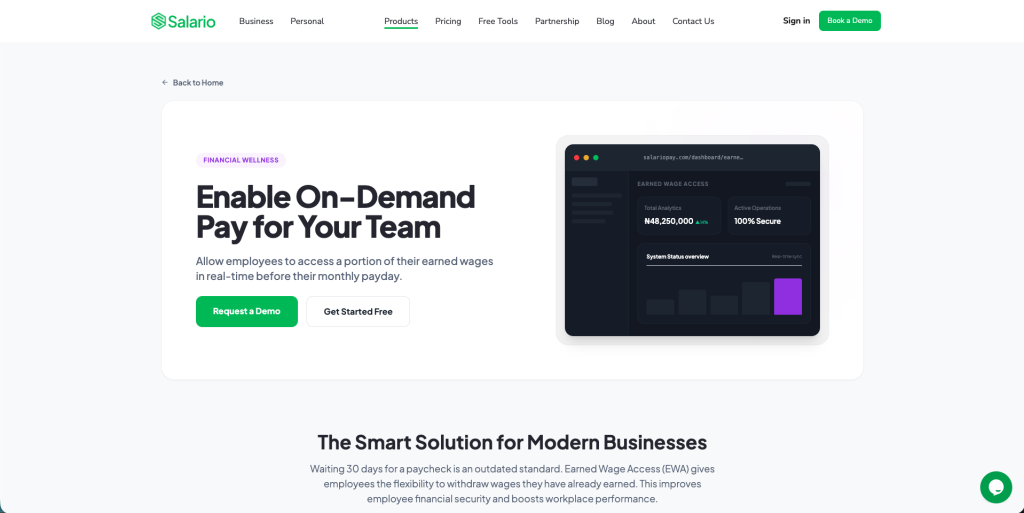
Earned Wage Access, or EWA, allows employees to withdraw part of the wages they have already earned before the regular payday.
It does not require the employer to increase the employee’s salary. Instead, it changes when an eligible portion of existing earnings becomes available.
For example, an employee paid on the final working day of the month may need money for an emergency on the 18th. If the employee has already completed eligible work, EWA can provide access to part of the accrued salary.
The amount received early is then reconciled against the employee’s remaining payday balance.
Why employees value EWA
Employees may use earned wages for:
- Transport
- Medical expenses
- Utility bills
- Food
- School-related expenses
- Family emergencies
- Unexpected repairs
EWA can reduce dependence on high-cost short-term loans and uncomfortable informal requests to HR.
Why employers value EWA
EWA can help employers:
- Reduce manual salary-advance requests
- Support employee financial wellbeing
- Improve the employee experience
- Strengthen the company’s benefits package
- Maintain a normal payroll schedule
- Avoid permanently increasing salaries
With externally financed EWA, the funding partner provides the early payment instead of the employer using its operational cash.
Salario’s Earned Wage Access platform connects accrued wages, employee requests, payouts and payroll reconciliation. Salario also supports externally financed withdrawals, helping employers provide financial flexibility without increasing base payroll or funding every request directly.
Employers can define access percentages, monthly limits, eligible employees, request frequency and approval requirements.
2. Flexible and Hybrid Work
Flexible work can be one of the most valuable employee benefits without increasing payroll costs.
Where the role permits, employees may be allowed to work remotely on selected days or combine office and remote work.
For employees, this can reduce:
- Transportation expenses
- Commuting time
- Daily meal costs
- Work-related stress
- Time spent in traffic
For employers, hybrid work may also reduce pressure on office space, electricity, internet and other workplace expenses.
Flexible work does not suit every position. Manufacturing, hospitality, retail, healthcare, logistics and field-based roles may require employees to be physically present.
Employers should apply flexible work policies fairly based on job requirements rather than using an identical arrangement for every role.
3. Flexible Working Hours
Flexible hours allow employees to adjust when they begin or finish work while still meeting their required hours and responsibilities.
For example, a company may allow employees to begin work between 7:30 a.m. and 9:30 a.m., provided they complete the required working period.
This can help employees manage:
- School drop-offs
- Long commutes
- Medical appointments
- Family responsibilities
- Religious commitments
- Personal productivity preferences
Shift-based businesses can also introduce controlled shift swapping. Employees can exchange approved shifts without forcing HR to rebuild the entire schedule.
The policy should still define working hours, availability expectations, approval procedures and performance requirements.
4. Employee Recognition Programmes
Employees want to know that good work is noticed.
Recognition does not always require a large cash bonus. A well-designed programme can celebrate employees through:
- Public appreciation
- Manager thank-you messages
- Employee-of-the-month recognition
- Performance certificates
- Leadership shout-outs
- Peer nominations
- Internal newsletters
- Team celebration meetings
- Priority access to development opportunities
Recognition should be specific. Telling an employee exactly what they did well is more meaningful than generic praise.
It should also be fair and consistent. If the same employees receive recognition repeatedly without transparent criteria, the programme may create resentment rather than motivation.
Recognition cannot replace appropriate compensation, but it can strengthen employees’ sense of contribution and belonging.
5. Internal Learning and Mentorship
Career development is valuable to employees, particularly those who want to build new skills or qualify for more senior roles.
Training does not always require expensive external programmes. Businesses can create internal development opportunities through:
- Mentorship
- Job shadowing
- Departmental knowledge-sharing
- Internal workshops
- Recorded training sessions
- Leadership office hours
- Cross-functional projects
- Free online courses
- Professional reading groups
- Rotational assignments
A finance manager might teach employees how to understand budgets. A senior salesperson could run a session on negotiation. A technical team member could introduce colleagues to productivity tools.
Internal learning turns knowledge already available within the business into an employee benefit.
It can also strengthen succession planning by preparing employees for future responsibilities.
6. Additional Leave and Time-Off Benefits
Time can be as valuable as money, especially for employees managing demanding personal responsibilities.
Employers can consider benefits such as:
- Birthday leave
- Mental health days
- Volunteer days
- Study or examination leave
- Compassionate leave
- Family-care days
- Extended parental leave
- Half-days before public holidays
- Additional leave based on tenure
- Paid time off after major projects
Additional leave has an indirect cost because the employee is paid while away from work. However, it does not necessarily create a permanent increase in monthly payroll.
Companies should determine how additional leave affects staffing, deadlines and customer service before introducing it.
Clear policies are important. Employees should know who qualifies, how to request the leave and whether unused days can be carried forward.
7. Employee Discounts and Partner Benefits
Businesses can partner with other companies to provide discounts to employees.
Possible partners include:
- Restaurants
- Pharmacies
- Supermarkets
- Gyms
- Hospitals and clinics
- Transportation providers
- Internet service providers
- Online learning platforms
- Professional associations
- Retail stores
- Childcare providers
The employer may negotiate a group discount without paying the full cost of the employee’s purchase.
Businesses can also exchange employee discounts with commercial partners. For example, two companies may provide each other’s employees with reduced prices.
Before promoting a partnership as an employee benefit, HR should confirm the discount is meaningful, the provider is reliable and employees can access it easily.
8. Payroll Transparency and Employee Self-Service
Accurate payroll is expected, but transparent payroll can also improve the employee experience.
Employees commonly ask HR for:
- Payslips
- Salary breakdowns
- Leave balances
- Tax information
- Pension details
- Previous payroll records
- Deduction explanations
- Bank-detail changes
- Advance balances
An employee self-service system gives employees direct access to this information without requiring repeated emails or messages to HR.
This creates value by giving employees more control and visibility.
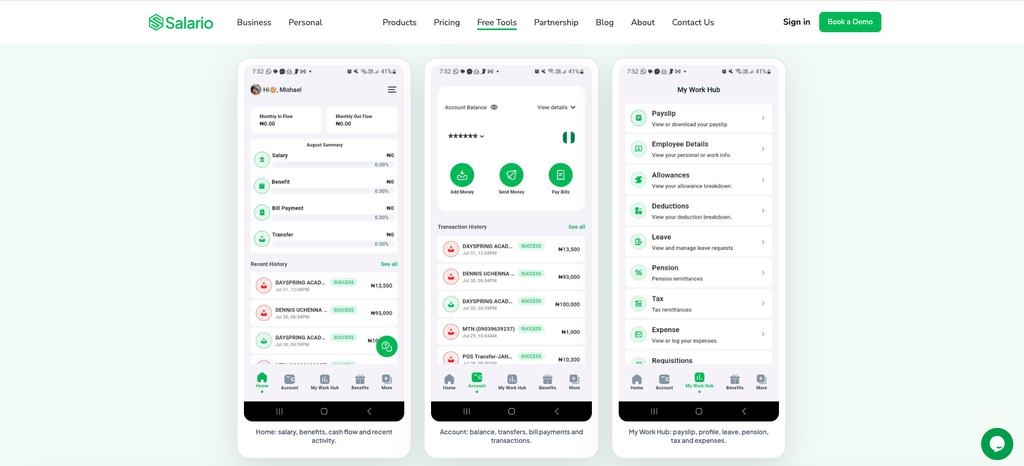
Salario’s employee self-service experience brings payroll history, payslips, benefits, balances, attendance, leave and eligible financial-wellness services into one web and mobile experience.
For employers already using HR or payroll software, employee self-service may be included in the existing subscription, meaning it can be activated without increasing salary costs.
9. Airtime and Data Benefits
Data and airtime are practical benefits for employees who use their personal phones or internet connections for work.
This can be particularly valuable for:
- Remote employees
- Sales representatives
- Field workers
- Customer-support teams
- Recruiters
- Delivery coordinators
- Employees who attend virtual meetings
Although airtime and data require a budget, the cost can be controlled more easily than a permanent salary increase.
Employers can provide:
- Monthly data bundles
- Airtime allowances
- Role-based connectivity limits
- One-off recharge rewards
- Internet support for remote employees
The benefit should be based on actual work requirements. Not every employee needs the same data allocation.
Salario allows businesses to manage airtime and data benefits alongside employee and payroll records. The company can maintain clearer records of who receives each benefit without managing separate spreadsheets.
10. Buy Now, Pay Later and Device Financing
Employees may need laptops, smartphones, home appliances, professional equipment or other products that are difficult to purchase with a single salary payment.
A Buy Now, Pay Later arrangement allows eligible employees to receive an approved product and repay the cost over time.
The employer does not necessarily purchase the item. A financing or retail partner can provide the product while repayments are managed through an agreed process.
Possible products include:
- Work laptops
- Smartphones
- Home-office equipment
- Professional tools
- Appliances
- Training programmes
- Certification fees
The arrangement should be transparent. Employees must understand the total cost, repayment period, payroll impact and what happens if their employment ends before repayment is complete.
Salario can connect BNPL providers to payroll workflows so approved deductions remain visible and properly recorded.
11. Health and Wellness Support
Comprehensive private health insurance may require a significant budget, but employers can begin with more affordable wellness options.
Examples include:
- Group telemedicine access
- Preventive health screenings
- Mental health webinars
- Employee assistance hotlines
- Fitness challenges
- Wellness education
- Negotiated clinic discounts
- Health-focused leave policies
- Workplace exercise sessions
- Health and safety training
Group plans may provide better pricing than employees purchasing services individually.
Employers should focus on benefits employees are likely to use instead of introducing wellness activities simply because they are popular.
12. Clear Career Paths and Internal Mobility
Employees are more likely to stay when they can see how their careers can progress.
A clear career framework can show employees:
- Available career levels
- Skills required for progression
- Performance expectations
- Possible promotion paths
- Internal vacancies
- Leadership opportunities
- Training requirements
Not every development opportunity needs an immediate salary increase. Employees can lead projects, join cross-functional teams, mentor colleagues or prepare for upcoming roles.
However, if an employee permanently takes on a more senior role or substantially greater responsibilities, their compensation should eventually reflect that change.
Career development should not become a way to assign higher-level work indefinitely without appropriate pay.
How to Choose Benefits Employees Actually Want
A benefit creates little value if employees do not need or use it.
Before introducing new benefits, employers should ask employees what would make the greatest difference.
A short anonymous survey can ask employees to rank options such as:
- Earned Wage Access
- Remote work
- Flexible hours
- Health support
- Data and airtime
- Additional leave
- Training
- Employee discounts
- Device financing
- Recognition programmes
Businesses should also consider workforce differences.
A remote software developer may value internet support, while a field salesperson may prefer airtime and transport-related benefits. A parent may value flexible hours, while an early-career employee may prioritise training and mentorship.
Benefit packages do not have to be identical, but eligibility rules should be fair, explainable and connected to genuine employee or role requirements.
How to Build a Low-Cost Employee Benefits Strategy
1. Establish a realistic budget
Determine how much the company can sustainably spend. Include direct provider fees, administration and indirect costs such as time away from work.
2. Identify employee priorities
Use surveys, interviews, HR data and exit feedback to understand what employees value.
3. Start with two or three benefits
Introducing too many programmes at once can create confusion and administrative work. Begin with high-impact benefits and measure adoption.
4. Create eligibility rules
Define who qualifies, when eligibility begins and whether benefits differ by role, location, employment type or tenure.
5. Communicate the complete value
Employees may underestimate their total compensation if benefits are not explained clearly. Show employees what is available and how to use each programme.
6. Connect benefits to employee records
Avoid tracking benefits across unrelated spreadsheets, messages and provider portals.
7. Measure usage and feedback
Review participation, employee satisfaction, administrative effort and cost. Benefits with consistently low usage may need to be changed or replaced.
How Salario Helps Businesses Manage Alternative Employee Benefits
Salario brings employee benefits, payroll and workforce records into one connected platform.
Businesses can use Salario to manage or support benefits such as:
- Earned Wage Access
- Airtime and data
- Health insurance records
- Buy Now, Pay Later arrangements
- Leave
- Pension
- Employee self-service
- Payroll-deducted benefits
Instead of managing each benefit through a separate spreadsheet, Salario helps employers connect eligibility, approvals, usage, deductions and reporting to the employee’s record.
This provides several advantages:
One employee record
Payroll, benefits, attendance, leave and employee information remain connected.
Payroll integration
Where a benefit affects payroll, the relevant deduction or adjustment can be recorded accurately.
Employee self-service
Employees can access supported benefits and payroll information without repeatedly contacting HR.
Policy control
Businesses can define benefit access according to company policy and eligible employee groups.
Better reporting
HR and Finance can maintain clearer visibility over benefit allocation, usage and payroll impact.
Employers can explore Salario’s guide to the best employee perks for Nigerian businesses or compare the best employee benefits management platforms.