

Tunde needed to hire a store manager fast. He wrote one document, called it a job description, and posted it online. It listed duties, a degree requirement, five years of experience, and “must be a team player.” Applications came in, but half the candidates were wrong for the role. Some had the skills but no interest in the actual duties. Others fit the culture but lacked the experience. Tunde had mixed up two different documents into one, and it cost him weeks of wasted interviews.
This mix-up is common. Many Nigerian business owners use job description and job specification as if they mean the same thing. They do not. Understanding the difference between a job description and a job specification is one of the simplest ways to hire faster and hire right. If your business is scaling and hiring your first employees, getting this distinction right from day one saves you real money and time later.
What Is a Job Description?
A job description explains the job itself. It answers one question: what does this role actually involve? A good job description includes the job title, who the person reports to, the main duties, and where the role sits in the company.
For example, a job description for an accounts officer would list tasks like reconciling bank statements, processing invoices, and preparing monthly reports. It would not go into detail about who should be doing these tasks. It stays focused on the work, not the worker.
A clear job description also protects you later. It sets expectations for performance reviews and gives new hires a reference point for what they were actually hired to do.
What Is a Job Specification?
A job specification is a different document entirely. Where a job description covers the role, a job specification covers the person. It lists the qualifications, skills, experience, and traits someone needs to succeed in that role.
Using the same accounts officer example, a job specification would state the required degree, years of experience with accounting software, attention to detail, and any certifications like ICAN. It answers a different question: who can actually do this job well?
Job specifications also help you screen candidates faster. Instead of guessing who might be a good fit, you compare each application against a clear list of requirements. This cuts down on interviews with candidates who were never going to qualify.
Job Description vs Job Specification: The Key Differences
The clearest way to separate a job description from a job specification is to remember what each one is built around. A job description is role-centered. A job specification is candidate-centered.
A job description tells a new hire what their day looks like. A job specification helps your HR team decide who to shortlist. A job description usually goes out publicly on job boards or your careers page. A job specification often stays internal, used mainly during screening and selection.
They also change at different speeds. A job description shifts as the role evolves, maybe after a reorg or a new tool gets adopted. A job specification changes when your standards for hiring change, such as raising the minimum experience level for a position.
Put simply: one defines the job. The other defines the person. Confusing job description vs job specifications lead to postings that either scare off good candidates with unrelated requirements or attract unqualified ones with vague expectations.
Why Nigerian Businesses Often Mix Up the Two
Many small and growing businesses in Nigeria write one combined document and call it a job description, folding in qualifications, personality traits, and duties all at once. It feels efficient, but it usually backfires.
Combining both documents makes it harder to update either one. If your reporting structure changes, you should not have to touch qualification requirements too. Separating them keeps each document accurate and easy to revise.
It also affects how you calculate hiring costs. When figuring out what an employee really costs your business, a vague job description or specification can mean you hire the wrong level of experience and overpay or underpay for the role. According to SHRM, a single bad hire can cost up to 30 percent of that employee’s first year salary once recruiting, onboarding, and lost productivity are counted. Clear, separate documents help you avoid that risk from the start.
How to Write Both Documents the Right Way
Start with the job description. List the job title, department, who the role reports to, and the core responsibilities in order of importance. Keep the language specific. “Manages customer complaints and resolves billing disputes” tells candidates more than “handles customer issues.”
Next, build the job specification from that description. For every major duty, ask what skill or qualification someone needs to actually perform it. If the job description says “prepares monthly financial reports,” the specification should require relevant accounting experience and familiarity with the tools you use.
Many businesses also fold both documents into a hiring requisition before opening a role. If you already track requests this way, requisition management can help keep job descriptions, specifications, and budget approvals in one place instead of scattered across emails and spreadsheets.
Review both documents at least once a year, or whenever the role changes significantly. A job description and job specification that stay accurate save your HR team from repeating the same hiring mistakes.
Get It Right From the Start
Writing a clear job description and job specification takes time most HR teams and founders do not have. Between reviewing resumes, running interviews, and managing existingHR teams and founders often skip sitting down to draft two separate documents for every open role skipped.
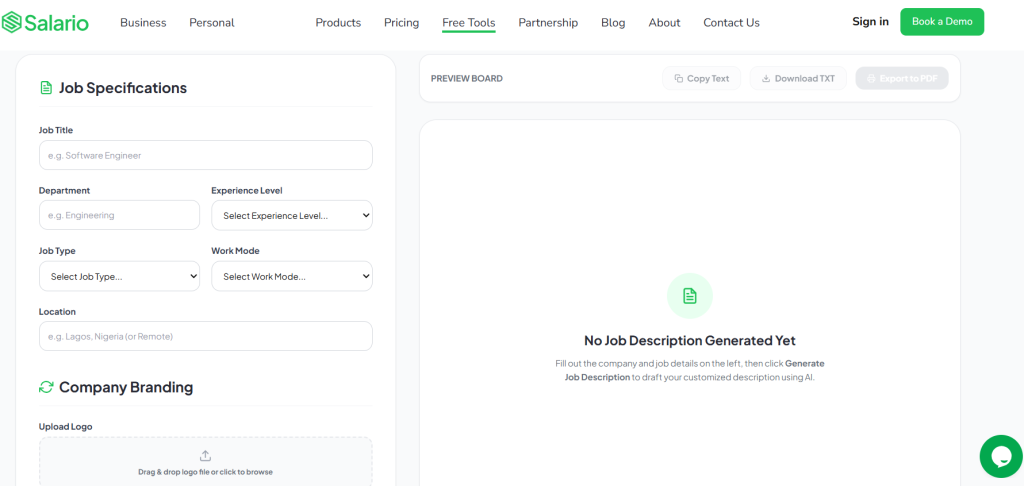
This is exactly the kind of gap Salario helps close. Instead of starting from a blank page, you can build a structured job description in minutes, one that clearly separates the responsibilities of the role from the qualifications you actually need in a candidate.
Ready to stop guessing what belongs in a job posting and what belongs in your screening checklist? Create a job description with Salario today and give your next hire a clear, accurate starting point. When your job postings are precise, the right candidates find you faster, and the wrong ones filter themselves out before you waste a single interview slot.