
Since 1 January 2026, Nigerian PAYE runs on six bands from 0 to 25 percent, and the old Consolidated Relief Allowance no longer exists. DLA Piper Africa warns that any payroll system not updated since then has been producing outdated payslips. That risk matters if you chose a payroll tool for its accounting brand instead of its Nigerian tax logic. Xero is a respected accounting name, so finance teams reasonably ask whether Xero Payroll can run their staff pay. This Xero Payroll vs Salario Payroll comparison sets both side by side on compliance, control, cost and setup. It credits Xero where it is strong. It also says plainly where Xero does not describe Nigerian payroll at all.
Xero Payroll vs Salario Payroll at a glance
Xero and Salario start from different places. Xero is accounting software first. Payroll sits inside the ledger, so pay run totals reach your books without re-keying. Salario is payroll first. It is a Nigerian platform built to calculate PAYE, pension and other statutory deductions, then give employers and staff one clear view of the result.
That difference shapes the rest of this Xero Payroll vs Salario Payroll comparison. A ledger-led tool does bookkeeping and reporting well. A payroll-led tool does statutory rules and the employee view well. Which job hurts more on the 25th of the month decides which tool fits you.
What Xero Payroll offers
Give Xero its due. Its UK payroll page describes automatic tax and pension calculation, filing with HMRC after each pay run, and pay runs that post straight to the general ledger. Employees see payslips and send leave requests in the Xero Me app. Xero also advertises more than 1,000 connected apps.
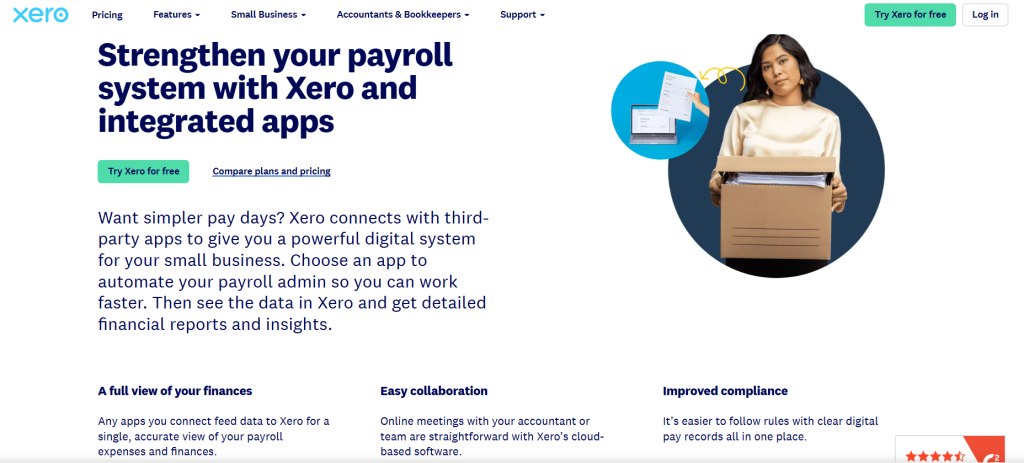
The catch for Nigerian employers is where that native payroll applies. Xero’s payroll pages for South Africa and Malaysia both tell users to connect a third-party payroll app for tax calculations, deductions and reporting. We found no Xero payroll page for Nigeria. ExpertSure’s UK review adds that Xero Payroll is an add-on to an accounting plan, not a standalone product. So a Nigerian team on Xero would likely lean on an add-on app or manual entry for PAYE and pension.
What Salario offers
Salario is a Nigerian payroll platform for SME owners, HR managers and diaspora founders. It automates PAYE, pension, NSITF and ITF calculations and gives each employee a self-service portal for payslips. Capterra lists one-click payroll, bulk employee onboarding, customizable payment methods and detailed audit trails, plus payroll reporting and tax compliance tools. Salario also offers earned wage access. Stablecoin payments in USDC and USDT are coming soon for cross-border teams.
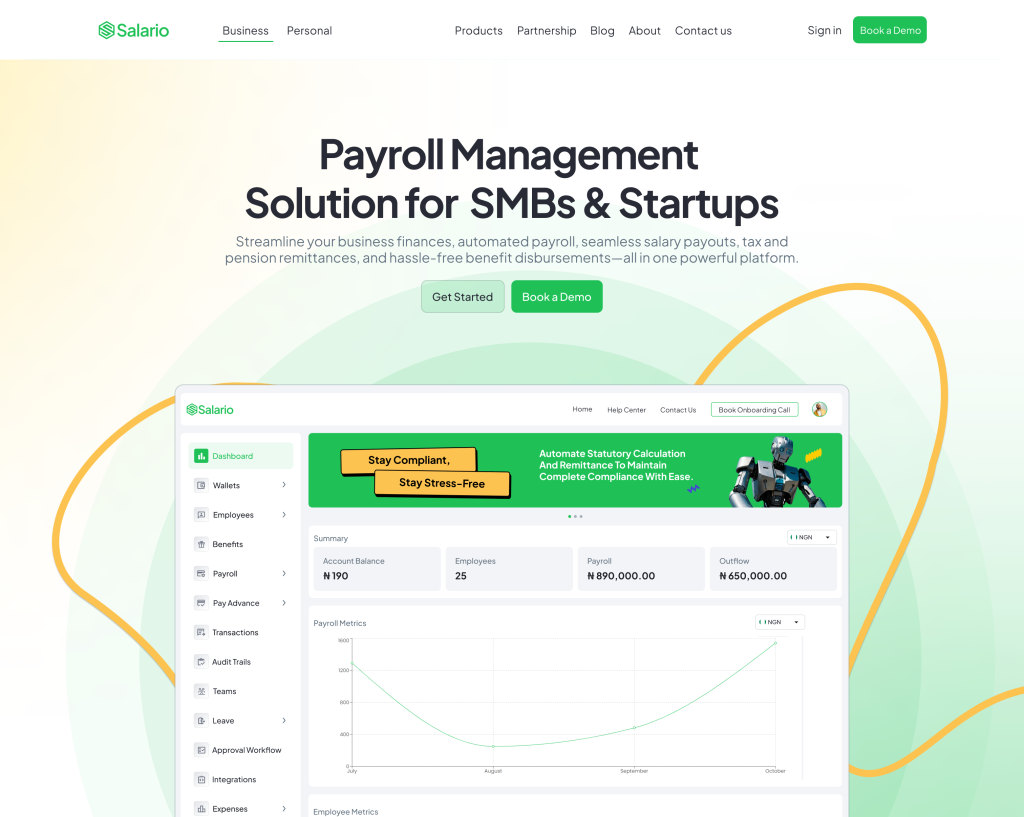
Two honest notes help here. Salario announced a free payroll option for Nigerian SMEs in March 2026, but that announcement ran as Brand Press on Techpoint Africa, so read it as Salario’s own claim. Capterra also shows no user reviews for Salario yet, which is worth knowing before you shortlist.
Xero Payroll vs Salario Payroll: feature by feature
Rows run in order of what costs a Nigerian employer most when wrong. Xero cells state what its own pages say. Where a page is silent, the cell says so, and the edge reads Unconfirmed.
| Feature | Salario | Xero Payroll | Edge |
| PAYE under the Nigeria Tax Act 2025 | Built for Nigerian PAYE, per Salario | Not described for Nigeria. Its South Africa and Malaysia pages point to third-party apps | Salario |
| Pension (10% employer, 8% employee) and PFA schedule | Pension calculation per Salario. PFA schedule format to confirm | Pension auto-enrolment is listed on its UK page only | Unconfirmed |
| NSITF and ITF levies | Listed by Salario as automated | Not described for Nigeria. Its South Africa and Malaysia pages point to third-party apps | Salario |
| State PAYE report and annual returns | To confirm in a demo | Not described on its payroll pages | Unconfirmed |
| Audit trail and role-based access | Audit trails per Capterra. Role-based access per Salario | Not described on its payroll pages | Unconfirmed |
| Employee self-service and payslips | Self-service portal, per Salario | Xero Me app for payslips and leave, listed on its UK page | Even |
| Bank payment of salaries | Customizable payment methods, per Capterra. Bank file formats to confirm | Open banking pay runs listed on its UK page. Nigeria not described | Unconfirmed |
| Earned wage access and cross-border pay | Earned wage access offered. USDC and USDT payments coming soon | Not described on its payroll pages | Unconfirmed |
| Ledger, bank feeds and reporting | Payroll reports listed. Ledger link to confirm | Pay runs post to the general ledger, per its UK page. A core strength | Xero |
| Price | Free access model for SMEs, per Salario’s March 2026 announcement | Global plans bill in US dollars, per Xero’s pricing update page | Salario |
Salario wins where Nigerian rules decide the outcome. The six PAYE bands, rent relief backed by documents, pension on the right base and the state PAYE deadline all sit inside its core job. That matters because the employer carries the risk. DLA Piper reports a 40 percent penalty on tax that should have been deducted but was not.
Xero wins at the ledger. Pay runs post to the books, and its app marketplace is large. If your accountant lives in Xero, that is real value. On employee self-service the two look even on paper, though the Xero Me evidence comes from a UK page, not a Nigerian one.
Rows marked Unconfirmed are not losses. They are questions. Ask any vendor to show three things live: a pension schedule split by PFA, a PAYE report for one named state, and the payslip an employee sees on a phone.
Nigerian compliance: where payroll software earns its keep
The 2026 bands start with the first ₦800,000 at 0 percent. They then climb through 15, 18, 21 and 23 percent to 25 percent above ₦50 million, per DLA Piper. Rent relief equals 20 percent of annual rent, capped at ₦500,000, and the employee must prove the rent with a receipt, lease or approved declaration. NHF deductions are now voluntary for private sector staff, so a system set up before 2026 may still be taking them.
Pension adds another clock. Employers must remit within seven working days of paying salary, and the penalty is at least 2 percent of the unpaid amount for each month of default, per PenCom. PenCom said it had recovered ₦32.27 billion from defaulting employers between June 2012 and September 2025, as reported by ThisDay. PAYE goes to the state where the employee lives by the 10th of the next month, and annual returns are due by 31 January. Pay in foreign currency is taxed at the CBN official rate on the day it is paid.
Most of this is rule logic, not bookkeeping, so Xero Payroll vs Salario Payroll turns on Nigerian tax depth. A tool built for it applies the rules every pay run. A tool without it asks your team to apply them by hand.
Control and fraud prevention
Payroll fraud in Nigeria usually looks ordinary. A ghost name sits in the sheet. An allowance gets padded. A bank detail changes late on a Friday. Good control means approvals, a record of who changed what, and limited access.
Salario lists detailed audit trails and offers role-based access, which helps a diaspora founder watch payroll from London or Toronto. The Xero payroll pages we reviewed do not describe audit trails or payroll approvals for Nigeria, so ask to see them. Whichever tool you pick, keep payroll access narrow, require a second approver, and review every change to bank details.
Cost and setup
Xero Payroll is not sold alone. You need an accounting plan first, then pay per employee, according to ExpertSure. Xero’s global plans bill in US dollars. Its pricing update page lists Starter at $32, Standard at $54 and Premium at $82 a month from 1 November 2026. Other sites quote different tiers and names, so confirm the figure at checkout for your region. A dollar bill feels heavier whenever the naira slips. Add an add-on payroll app for Nigerian rules, and the total moves again.
In a Xero Payroll vs Salario Payroll cost check, Salario states a free access model for Nigerian SMEs, with eligibility and onboarding details on its website. Ask what the free tier covers, where paid tiers begin, and how long setup takes. Capterra lists no price for Salario, so the demo is where you get numbers.
Who should choose which
Here is how the Xero Payroll vs Salario Payroll choice breaks down. Choose Xero if your books already live there, your team is small, and your accountant handles PAYE and pension through an add-on app or outside the tool. You get strong ledger posting and a mature app marketplace.
Choose Salario if statutory accuracy, remittance records and a clean employee payslip are your daily pain. It also suits owners who manage Nigerian staff from abroad.
You can use both. Run payroll in Salario and post the totals into Xero. Ask Salario which accounting tools it connects to, or whether a journal import works, before you count on it.
A Xero payroll alternative in Nigeria
People searching for a Xero payroll alternative in Nigeria usually hit one of three walls. The tax rules changed in January. Dollar pricing makes budgeting hard. Staff want payslips they can open on a phone. Salario is built around those three. It calculates Nigerian statutory deductions and gives employees a portal. Earned wage access adds a way for staff to reach pay they have already earned. Stablecoin payments are coming soon for teams that span borders.
That does not make Xero a poor choice. It makes it a different one. If you need a Nigerian-first payroll engine, start with Salario and keep Xero for your books.
Bottom line: Xero Payroll vs Salario Payroll
In Xero Payroll vs Salario Payroll terms, Xero is strong accounting with payroll built for a few markets. Salario is Nigerian payroll built around PAYE, pension and the employee view. For compliance and control in Nigeria, Salario is the safer starting point. For ledger depth, Xero stays strong, and many teams will want both.
Ready to run PAYE and pension correctly under the 2026 rules? Book a free demo with Salario today and see how Salario handles PAYE, pension and payslips for your team. When payroll follows Nigerian law every month, finance teams get their evenings back.