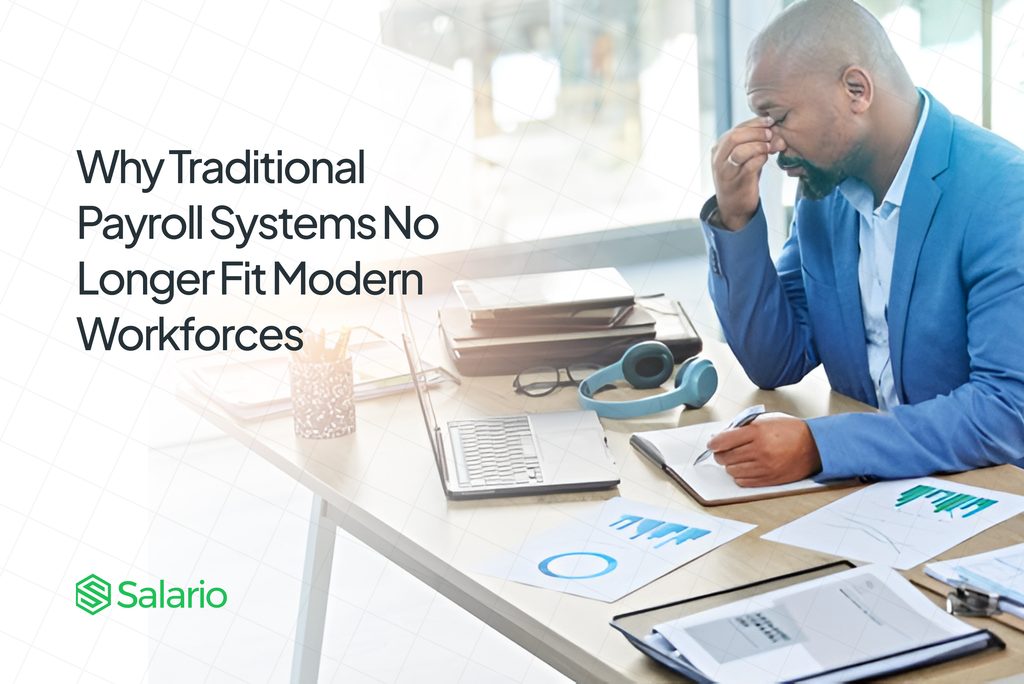
It’s no news that traditional payroll systems no longer fit modern workforces. The way we work has changed dramatically, but many businesses are still using payroll systems designed for a different era. Traditional payroll systems, built around fixed office hours, monthly bank transfers, and manual processes, are struggling to keep up with today’s reality.
Modern workforces now include remote employees, hybrid teams, gig workers, contractors, and global talent. This shift has created new expectations around speed, flexibility, transparency, and accuracy. In this article, we explore why traditional payroll systems are falling short and what growing businesses need to thrive in the age of modern workforces. Let’s dive in.
The Evolution of Work and Why Payroll Must Evolve
Work today looks very different from what it was a decade ago. The rise of remote and hybrid models, the gig economy, and distributed teams has transformed how people earn and expect to be paid. Traditional payroll systems were designed for stable, office-based workforces with predictable schedules. As modern workforces become the norm, these outdated systems create friction, inefficiencies, and dissatisfaction. Here is how the evolution of work is exposing the limitations of traditional payroll systems.
Rise of Remote and Hybrid Teams

More employees now work from different locations, cities, or even countries. Traditional payroll systems often struggle with multi-location processing, different tax jurisdictions, and flexible working hours. This mismatch creates delays and inaccuracies that frustrate both employers and employees in modern workforces.
Growth of Gig and Contract Workers
Many businesses now rely on freelancers and contractors alongside full-time staff. Traditional payroll systems are not built to handle mixed workforces smoothly. Managing different payment terms, tax obligations, and schedules manually becomes complex and error prone.
Demand for Speed and Flexibility
Employees in modern workforces expect faster access to their earnings. They want transparency and options like earned wage access. Traditional payroll systems, with their rigid monthly cycles, cannot meet these expectations, leading to lower employee satisfaction and higher turnover.
Global Talent and Multi Currency Needs

Growing companies are hiring talent from across borders. Traditional payroll systems make it difficult and expensive to handle multiple currencies, international compliance, and fast cross border payments required by modern workforces.
Why Traditional Payroll Systems Struggle in Today’s Environment
Traditional payroll systems were created for a stable, predictable workplace. Today’s modern workforces demand agility, transparency, and integration that these systems simply cannot deliver effectively.
Inflexibility with Diverse Work Arrangements
Traditional payroll systems assume everyone works the same hours in the same location. They struggle with variable hours, remote work, and different employment types common in modern workforces, leading to constant manual adjustments and errors.
High Administrative Burden

Manual calculations, data entry, and reconciliation consume significant time and resources. Finance and HR teams end up spending hours on repetitive tasks instead of strategic work, increasing operational costs for businesses managing modern workforces.
Limited Visibility and Control
Business owners often lack real time insight into payroll status, especially when managing remote teams. Traditional systems provide information only after processing, making it hard to spot issues early or maintain control.
Poor Compliance Handling
Keeping up with changing Nigerian regulations, tax rules, and statutory contributions is challenging with outdated systems. This increases the risk of penalties and compliance failures.
Inability to Support Employee Expectations
Modern workforces want faster payments, clear payslips, and convenient self service options. Traditional payroll systems fall short in delivering the experience employees now expect.
What Modern Workforces Actually Need from Payroll
Today’s employees and the businesses that employ them have new requirements that traditional payroll systems cannot meet. Modern workforces need payroll that is fast, transparent, flexible, and integrated with their way of working.
Speed and On Demand Access
Employees want quicker access to earned wages. Modern payroll should support features like earned wage access without disrupting core processes.
Transparency and Clarity
Workers expect clear visibility into how their pay is calculated, including deductions and benefits. Transparent systems build trust and reduce disputes.
Flexibility Across Work Types
Payroll must easily handle full time, part time, contract, and gig workers with different payment schedules and currencies.
Seamless Integration and Automation
Modern systems should connect attendance, HR data, and payments automatically to reduce errors and save time.
Strong Compliance and Security
Reliable payroll must automatically handle local regulations while protecting sensitive employee data.
How Salario Delivers Payroll That Fits Modern Workforces
Salario is built to bridge the gap between traditional payroll limitations and the needs of modern workforces.
Advanced Automation

Salario provides seamless payroll automation. It automates complex calculations, deductions, and payments, reducing manual work and errors significantly.
Real-Time Visibility
Business owners gain complete oversight of payroll activities from anywhere, supporting better decision making for modern workforces.
Seamless Compliance
The platform handles Nigerian statutory requirements automatically, ensuring full compliance with minimal effort.
Employee Self Service Features
Team members can access payslips and manage requests easily, improving satisfaction and reducing HR workload.

Support for Flexible Payment Options
Salario is actively developing enhanced capabilities, including earned wage access, to meet the expectations of today’s dynamic workforces.
Conclusion
Traditional payroll systems were designed for a different time and a different way of working. As modern workforces continue to evolve, these outdated systems create more problems than solutions. Businesses that want to attract and retain talent while maintaining control and compliance need payroll solutions that match today’s realities. Salario provides exactly that: a modern, automated, and flexible platform designed for the way people actually work now.
The future of payroll belongs to systems that support modern workforces, not hold them back. If your business is ready to move forward, book a demo with our team today and discover how we can transform your payroll experience!