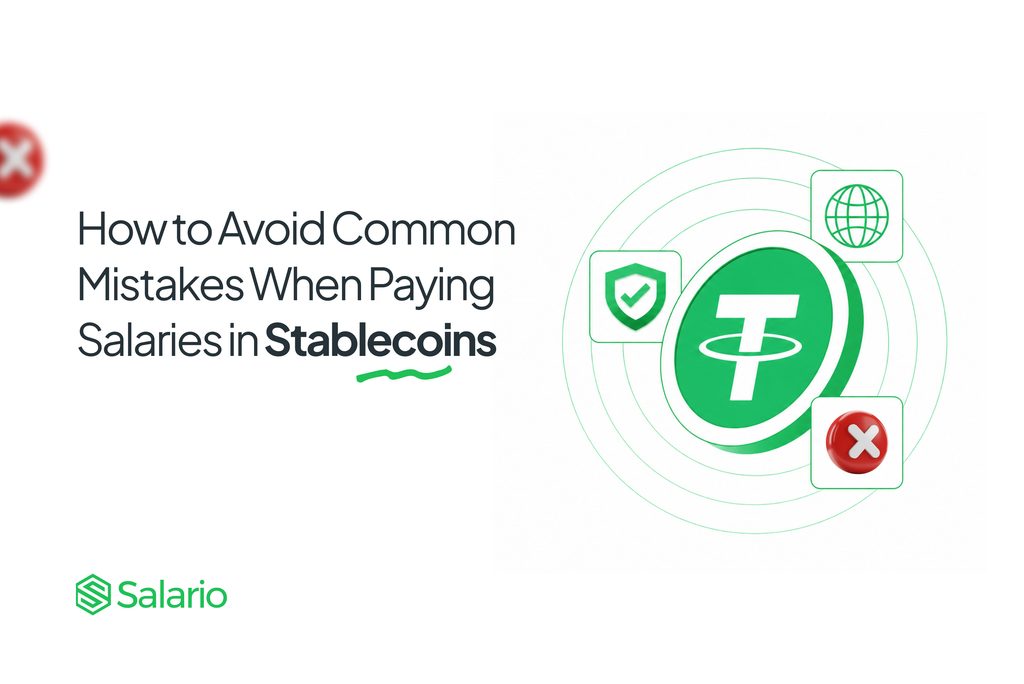
Many business owners in Nigeria are turning to stablecoin payroll to enjoy faster payments and lower costs. Yet, this promising approach comes with its own set of challenges. Nearly one in five traditional payrolls already contains errors according to a business survey carried out in the United States, and the irreversible nature of blockchain transactions makes mistakes when paying salaries in stablecoins far more costly. In this article, we look into the most common mistakes businesses make when paying salaries in stablecoins and provide practical guidance on how to avoid them so you can implement stablecoin payroll safely and effectively. Let’s dive in!
Common Mistakes When Paying Salaries in Stablecoins
Paying salaries in stablecoins offers clear advantages but also introduces new risks that many businesses underestimate. From legal oversights to technical errors, these mistakes can lead to financial losses, regulatory penalties, damaged employee trust, and operational headaches. Understanding the most frequent pitfalls is the first step toward building a reliable stablecoin payroll system that works smoothly for both the company and its team members, especially when handling payroll in Nigeria where regulatory expectations and cross border considerations add extra layers of complexity.
Legal and Compliance Mistakes

One of the biggest errors businesses make is failing to understand the legal framework surrounding stablecoin payroll when paying salaries in stablecoins. Many assume that paying in stablecoins is the same as traditional bank transfers without checking local wage laws or regulatory requirements in the jurisdiction. This oversight can result in non-compliance issues, fines, or even disputes with authorities. Proper legal review ensures that paying salaries in stablecoins are structured correctly.
Businesses that skip this step often face unexpected challenges during audits or when employees raise questions about their compensation records. Taking time to consult with professionals who understand both blockchain and Nigerian labour laws helps avoid these costly compliance traps and keeps the entire payroll process legitimate and transparent.
Poor Tax Handling and Reporting
Many companies struggle with accurately determining the fair market value of stablecoins at the exact moment of payment for tax purposes. Incorrect reporting of taxable income or failure to withhold the right amounts can create serious problems with tax authorities. Some businesses also forget to maintain proper documentation for each transaction, making reconciliation difficult during filing seasons.
Poor tax handling not only risks penalties but also creates confusion for employees who need accurate records for their personal filings. A robust system that automatically captures transaction values and generates compliant reports saves significant time and reduces stress for finance teams managing stablecoin payroll.
Sending Payments to Wrong Wallet Address

Blockchain transactions are irreversible, making a wrong wallet address one of the most expensive and frustrating mistakes in stablecoin payroll. Business owners or HR teams sometimes copy addresses incorrectly or fail to verify the network being used. Once sent, recovering funds is extremely difficult and often impossible. This error not only results in direct financial loss but also damages trust with employees who expect their salaries on time. Double checking addresses, using address whitelisting features, and confirming receipt with small test transactions are essential practices that many businesses learn only after experiencing a painful mistake. For businesses paying salaries in stablecoins, this mistake should be avoided at all costs.
Operational Mistakes
Operational issues such as inadequate funding of wallets, or failing to account for network fees frequently disrupt stablecoin payroll. It’s easy to underestimate the coordination required between finance, HR, and technical teams, leading to delays or incomplete salary disbursements. These operational gaps create unnecessary stress for employees and extra workload for internal teams who must resolve complaints. Streamlining processes with clear checklists and automated reminders helps maintain consistency and prevents small oversights from escalating into major payroll problems.
Poor Employee Education

Many businesses introduce stablecoin payroll without adequately preparing their employees. Team members who are new to digital wallets may not know how to secure their funds, select the right network, or avoid common scams. This lack of education leads to lost funds, delayed access to salaries, and frustration that could have been avoided. Good employee onboarding and ongoing support are crucial for successful adoption of stablecoin payroll.
Inadequate Wallet and Security Controls
Using single signature wallets or weak security practices exposes businesses to hacking, unauthorized access, and internal threats. Without proper controls like multi-signature approvals or transaction limits, one compromised account can lead to significant losses. Many companies underestimate these risks until an incident occurs, highlighting the need for enterprise-level security measures when handling stablecoin payroll.
How to Avoid Common Mistakes When Paying Salaries in Stablecoins
Avoiding mistakes in stablecoin payroll requires deliberate planning, the right tools, and ongoing attention to detail. Businesses that take a structured approach can significantly reduce risks while enjoying the benefits of faster and more cost effective salary payments. The following strategies have helped many organizations implement stablecoin payroll successfully and maintain smooth operations.
Establish Clear Legal and Compliance Frameworks
Start by consulting with legal and tax professionals who understand different jurisdiction’s regulations and digital asset payments. Develop clear policies that define how stablecoin payroll fits into your overall compensation structure.
Regular compliance reviews and documentation practices ensure you stay aligned with current requirements. This proactive approach prevents legal surprises and builds a strong foundation for scaling stablecoin payroll confidently.
Implement Robust Tax Tracking and Reporting Systems

Use payroll platforms like Salario that automatically capture the fair market value of stablecoins at payment time and generate necessary tax reports. Automating these processes reduces manual errors and ensures accurate reporting for both the business and employees. Good tax handling protects your company from penalties while providing employees with reliable documentation.
Double Verify Wallet Addresses and Use Safety Mechanisms
Always verify wallet addresses multiple times and consider using whitelisting features that only allow payments to pre-approved addresses. Send small test transactions first and confirm receipt with the recipient before processing full salaries. These simple but effective habits dramatically reduce the risk of sending funds to the wrong destination and provide an extra layer of protection in stablecoin payroll.
Streamline Operations with Clear Processes
Create standardized checklists for every payroll cycle that cover wallet funding, timing, fee estimation, and team coordination. Automate repetitive tasks where possible and assign clear responsibilities to different team members. Well documented operational procedures minimize confusion and ensure salaries are paid consistently and on schedule.
Invest in Comprehensive Employee Education

Provide thorough onboarding sessions, easy to follow guides, and ongoing support for employees receiving stablecoin salaries. Cover topics such as wallet security, network selection, and scam prevention. Regular check ins and a dedicated support channel help employees feel confident and reduce the number of issues that arise from lack of knowledge.
Adopt Strong Security and Wallet Controls
Implement multi-signature wallets, transaction approval workflows, and strict access controls for all payroll related accounts. Work with reputable custody solutions and conduct regular security audits. These measures protect against both external threats and internal risks, giving business owners greater peace of mind when managing stablecoin payroll.
Choose the Right Payroll Platform

Selecting the right payroll partner crowns it all. It is one of the most important decisions when implementing stablecoin payroll. Look for a platform like Salario, that offers built in compliance tools, automated tax reporting, secure custody integrations and dedicated support for Nigerian businesses. The platforms also provide employee self service features and real time monitoring to catch issues early.
A reliable solution reduces manual work, minimizes human error, and gives you the confidence to scale stablecoin payroll without constantly worrying about mistakes. Choosing a platform designed specifically for the Nigerian market with future ready stablecoin capabilities can save you significant time, money, and stress in the long run.
Conclusion
Paying salaries in stablecoins can transform how businesses handle payroll in Nigeria, offering speed, efficiency, and better value preservation. However, success depends on avoiding common pitfalls through careful planning and the right safeguards. By understanding these mistakes and implementing proven strategies, you position your business to reap the full benefits of stablecoin payroll while protecting both your company and your employees. Ready to implement stablecoin payroll the right way? Book a demo with our team today. Discover how our automation, deep local compliance, advanced-level security, and stablecoin integration can help you pay salaries in stablecoins confidently, accurately, and stress free. With Salario, you get a payroll system you can truly trust!