
Fixed asset management is one of the most important yet often overlooked aspects of financial control in growing organizations. Finance teams that master fixed asset management gain better visibility into company resources, improve financial reporting accuracy, and reduce the risk of costly errors during audits. In today’s competitive business environment, especially in Nigeria, effective fixed asset management helps organizations make smarter investment decisions and maintain strong compliance standards.
This article explains what fixed asset management involves, why it matters, and practical steps every finance team should take to implement it successfully. Let’s dive in!
What Are Fixed Assets and Why Fixed Asset Management Matters
Fixed assets are long term resources that a company owns and uses to generate revenue over multiple years. These include buildings, vehicles, machinery, furniture, computers, and other equipment. Unlike current assets that are converted to cash within a year, fixed assets stay in the business for longer periods. Fixed asset management involves tracking, valuing, maintaining, and accounting for these items throughout their useful life.
Proper fixed asset management ensures accurate financial statements, supports tax compliance, and helps businesses understand the true cost of operations. Without strong fixed asset management, companies risk overstatement or understatement of assets, leading to distorted financial pictures and potential regulatory issues.
Key Components of Effective Fixed Asset Management
Successful fixed asset management requires attention to several core components. Finance teams that focus on these areas build a solid foundation for accurate reporting and operational efficiency.
Comprehensive Asset Identification and Registration
A central asset register serves as the single source of truth for all company assets. It should include details such as description, purchase date, cost, location, assigned user, condition, and depreciation status. Regularly updating this register ensures accurate financial reporting and makes it easier to identify missing or underutilized assets. For growing organizations, maintaining an up to date register prevents surprises during audits and supports informed decisions about future investments and resource allocation.
Accurate Valuation and Depreciation
Fixed asset management requires consistent and correct calculation of depreciation based on the asset’s useful life and accounting standards. Proper valuation ensures financial statements reflect the true worth of company resources and helps with accurate tax reporting. This practice also provides management with reliable data for budgeting and strategic long-term planning.
Ongoing Tracking and Location Management
Effective fixed asset management includes systems to monitor where assets are located and who is responsible for them. Regular updates and verification processes help detect losses early and maintain accountability across different departments or locations. This level of control is especially valuable for companies with multiple offices or field operations.
Maintenance and Lifecycle Oversight
Tracking maintenance schedules and the overall condition of assets is a critical part of fixed asset management. Proactive maintenance extends asset life and reduces unexpected repair costs while helping finance teams plan for replacements at the optimal time. A well managed lifecycle approach minimizes downtime and optimizes return on investment for every major asset.
Proper Disposal and Retirement Processes
When assets reach the end of their useful life, fixed asset management requires documented procedures for disposal or sale. Accurate recording of these transactions ensures the asset register remains current and financial records stay reliable. Proper disposal processes also help recover value from old assets and maintain compliance with environmental and tax regulations.
Modern Solutions for Fixed Asset Management
Technology has transformed fixed asset management by automating tracking, improving accuracy, and providing real-time insights. Modern tools make it easier for finance teams to maintain complete and reliable records while reducing manual workload. Here are the main ways technology enhances fixed asset management for growing organizations.
Cloud-Based Asset Management Software

Cloud-based solutions allow multiple team members to access and update asset records from anywhere. This improves collaboration and ensures data is always current. Cloud platforms also offer automatic backups and strong security features that protect sensitive asset information from loss or unauthorized access.
Barcode and RFID Tracking Systems
These technologies enable quick and accurate identification of assets during audits and daily operations. They reduce human error in recording movements and help locate items faster across different sites. The data collected from these systems also feeds directly into financial reports and maintenance schedules.
Integration with Financial Systems
When asset management tools connect with accounting and payroll software, data flows automatically between systems. This integration eliminates duplicate entry and ensures consistency across financial records. It also makes it easier to generate accurate depreciation reports and maintain audit readiness.
Mobile Apps for Field Teams

Mobile applications allow staff to update asset status, report maintenance needs, or scan items directly from the field. This real time capability improves data quality and speeds up decision making. Finance teams benefit from having fresher and more reliable information for planning and reporting.
Common Mistakes to Avoid in Fixed Asset Management
Many finance teams make avoidable errors in fixed asset management that create long term problems. Being aware of these mistakes helps prevent costly setbacks.
Relying on Manual Records

Using spreadsheets or paper records works for very small teams but quickly becomes unreliable as the business grows. Manual systems are prone to errors, duplication, and loss of information, which compromises the accuracy of financial reporting.
Poor Categorization of Assets
Failing to properly categorize assets makes tracking, reporting, and depreciation difficult. Clear categories help with maintenance scheduling and financial analysis, ensuring better overall control.
Inadequate Training for Staff

When employees do not understand asset management policies, they may misuse equipment or fail to report issues promptly. Proper training improves accountability and reduces losses across the organization.
Neglecting Regular Audits
Skipping physical verifications allows assets to go missing or deteriorate without notice. Regular audits are essential for maintaining accurate records and supporting strong financial governance.
How Salario Supports Better Fixed Asset Management
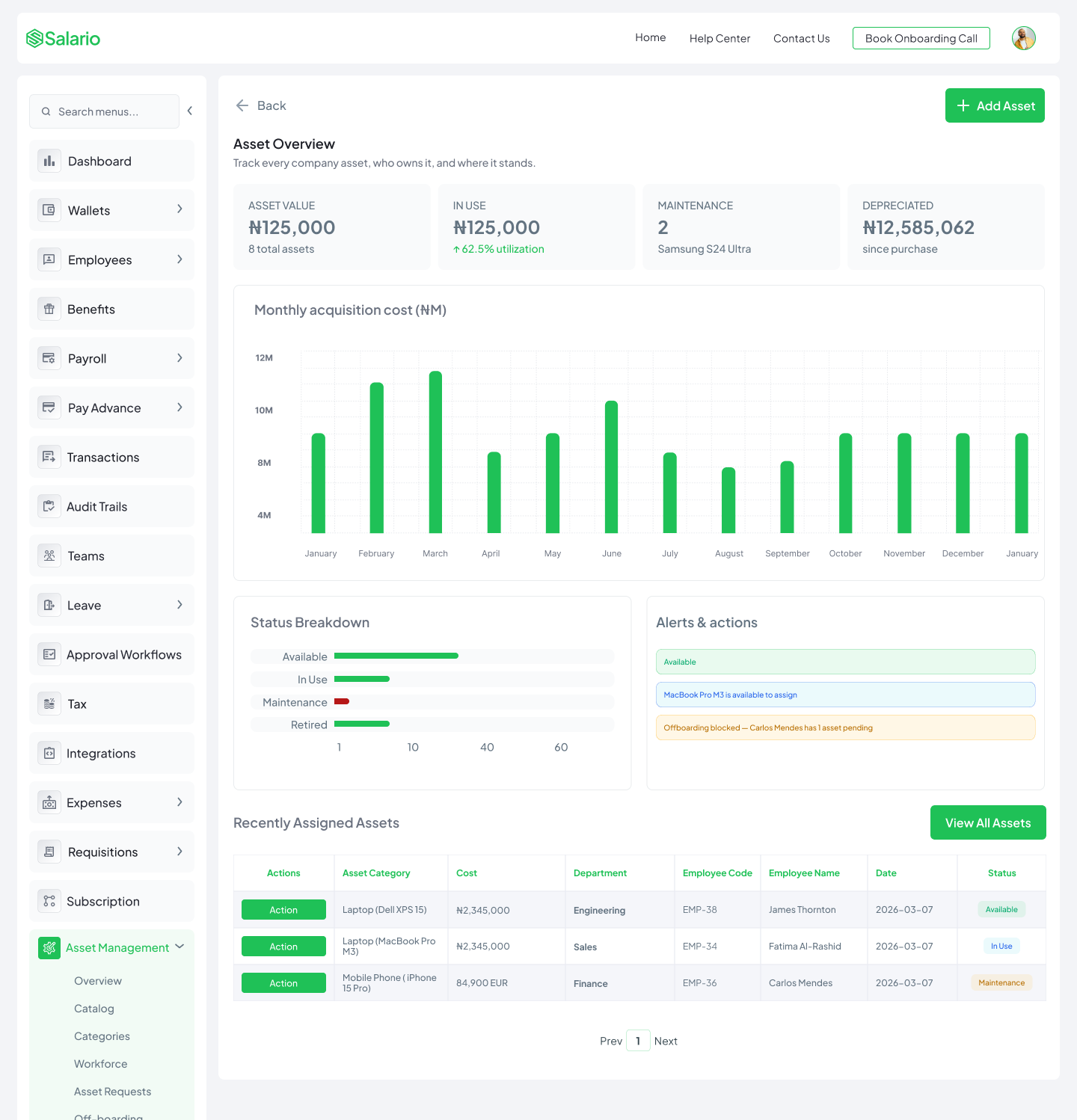
Salario helps finance teams strengthen fixed asset management through powerful automation and visibility tools that complement broader financial operations.
Powerful Automation Features
Salario automates key financial processes, reducing manual work and minimizing errors in areas that intersect with fixed asset management, such as expense tracking and financial reporting. This automation improves overall efficiency and accuracy for growing organizations.
Audit-Ready Records
The platform maintains comprehensive, well organized records that make audits smoother and less stressful. Growing organizations benefit from having reliable documentation readily available whenever needed for compliance reviews.
Real-Time Transparency and Visibility
Salario provides clear dashboards that give leaders real-time insight into financial data. This transparency helps connect fixed asset management with broader financial oversight, supporting better decision making as the organization scales.
Conclusion
Fixed asset management is a critical function that directly impacts financial accuracy, compliance, and operational efficiency. Growing organizations that invest in proper fixed asset management gain better control over their resources and make smarter strategic decisions. By implementing the best practices outlined in this article and leveraging the right tools, finance teams can transform fixed asset management from a challenging task into a strategic advantage. Ready to strengthen your fixed asset management processes? Assess your current system and consider how automation and better visibility can support your growth journey. Book a demo with our team today! Our team is here to help businesses build efficient, compliant, and scalable operations!