

Femi, a corporate employee, sits at his desk, but his mind is elsewhere. Rent is due in a few days, some bills are still unpaid, and the next salary is more than a week away. He tries to focus, yet every task takes longer. This quiet struggle is more common than many employers realise. Employee financial stress does not always show up as a formal complaint. Instead, it slowly affects performance, attendance, engagement, and retention.
The real cost is often hidden, showing up in reduced productivity, higher turnover, and constant pressure on payroll and managers. In this article, we look at the hidden costs of employee financial stress and what employers can do to resolve it. Let’s dive in!
The Hidden Costs of Employee Financial Stress
Employee financial stress goes far beyond personal discomfort. When employees are constantly worried about money, the effects spill into the workplace in ways that many organisations underestimate. These costs are rarely listed in financial reports, yet they influence output, culture, and long-term stability.
Reduced productivity and focus
When employees are preoccupied with how to stretch their salary or meet urgent obligations, concentration suffers. Tasks take longer, attention to detail drops, and deep work becomes difficult. Over time, this quiet decline in productivity affects team output and project timelines. Employee financial stress turns mental energy that should go into work into constant calculation and worry.
Increased errors and poorer decision-making
Financial pressure affects cognitive load. Employees under stress are more likely to make mistakes, overlook details, or struggle with complex decisions. In roles that require accuracy, such as finance, operations, or customer service, these errors can create additional costs through corrections, complaints, or rework. The link between employee financial stress and declining work quality is often missed until patterns become hard to ignore.
Presenteeism and absenteeism
Some employees show up to work but are mentally checked out because of money worries. Others may take more time off to deal with financial emergencies or the emotional weight of ongoing pressure. Both presenteeism and absenteeism reduce effective working hours and place extra burden on colleagues. Employee financial stress quietly drains capacity from the team even when people are physically present.
Higher turnover and recruitment costs
Persistent financial pressure can push employees to look for higher-paying roles or more stable environments. Replacing staff is expensive. Recruitment, onboarding, and lost productivity during the transition all add up. When employee financial stress contributes to preventable exits, the organisation pays repeatedly for the same roles.
Lower engagement and morale

Employees who feel constantly behind financially often disengage. They may stop contributing ideas, avoid extra responsibility, or become less willing to collaborate. Over time, this lowers team morale and weakens culture. Employee financial stress does not only affect the individual; it influences how people relate to their work and to each other.
Increased pressure for salary advances and informal support
When employees struggle to cope, requests for advances, loans, or informal assistance tend to rise. While occasional support can help, frequent and unstructured requests create administrative strain and cash flow pressure for the business. This is one of the more visible signs of deeper employee financial stress within the organisation.
Practical Ways Employers Can Reduce Employee Financial Stress
Employers cannot remove every financial challenge staff face, but they can reduce the intensity and frequency of workplace stress linked to money. Small, consistent actions often make a meaningful difference.
Ensure accurate and timely payroll
Few things increase employee financial stress faster than late or incorrect salaries. Reliable payroll builds trust and removes one major source of uncertainty. When people know exactly when and how much they will be paid, it becomes easier to plan and manage their responsibilities.
Offer structured access to earned wages
Earned wage access allows employees to receive a portion of wages they have already earned before the official payday. This provides short-term relief without the high costs and risks associated with external payday loans. When implemented properly, it can significantly reduce the pressure that builds in the days leading up to salary payment.
Improve transparency around pay and deductions
Confusion about payslips, deductions, or benefits adds to financial anxiety. Clear communication and easy access to payroll information help employees understand their earnings and plan better. Transparency is a simple but powerful way to lower employee financial stress.
Create clear and fair policies for advances
If salary advances are part of your culture, they should be guided by clear rules. Structured policies reduce inconsistency, prevent abuse, and make the process less stressful for both employees and HR managers.
Support open but professional conversations
Managers do not need to become financial counsellors. However, creating a culture where staff can raise practical concerns without fear helps the organisation respond earlier and more effectively. Awareness is the first step toward reducing the impact of employee financial stress.
How Salario Helps Address Employee Financial Stress
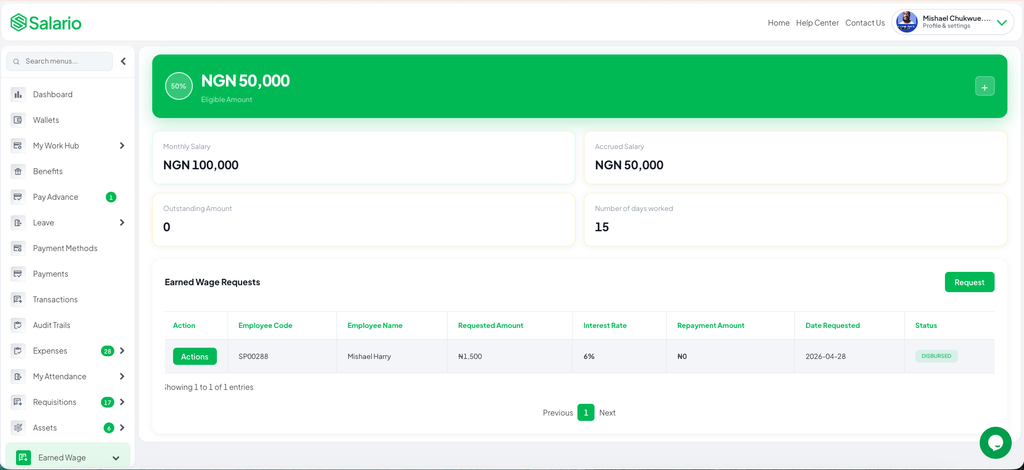
Salario is built to reduce some of the most common workplace triggers of financial pressure by making payroll more reliable, transparent, and responsive to employee needs.
Accurate and timely payroll processing
Salario helps businesses run payroll consistently and correctly. When salaries are paid on time and without errors, one of the biggest drivers of employee financial stress is reduced.
Earned wage access
Through its partnership with Fundmey, Salario enables employees to access a portion of wages they have already earned before payday. This gives employees a safer alternative to high-interest loans and helps them manage urgent needs without long-term financial damage.
Greater visibility and self-service
Employees can better understand their earnings, deductions, and payment history through clearer systems. This transparency reduces uncertainty and helps people feel more in control of their finances.
Reduced administrative workload
By automating key payroll processes, Salario lowers the chance of delays and errors that often increase tension between employees and management. A smoother system benefits both the organisation and its people.
Conclusion
Employee financial stress is not just a personal issue. It carries real costs for businesses through lower productivity, higher errors, weaker engagement, and increased turnover. While employers cannot solve every financial challenge employee face, they can reduce unnecessary pressure through reliable payroll, clearer communication, and practical tools such as earned wage access. Addressing employee financial stress is ultimately an investment in performance, stability, and trust. Salario helps organisations take practical steps in that direction. Ready to reduce the impact of employee financial stress in your workplace? Book a demo with our team today. Supporting your employee financially is also supporting your business!