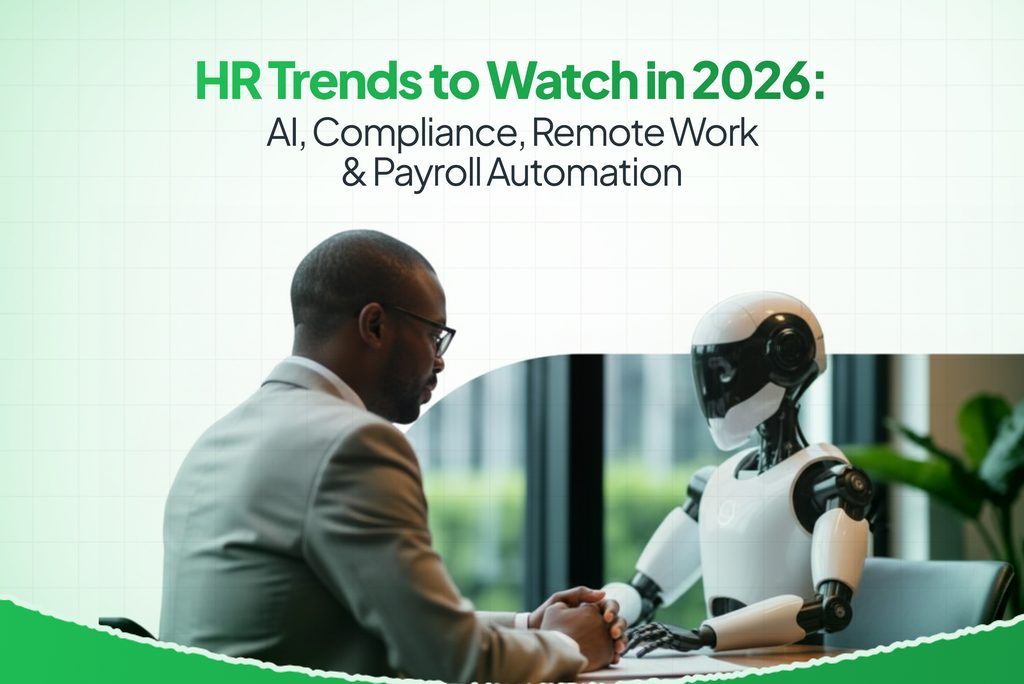
As we head into the new year, these HR Trends to Watch in 2026 will shape how Nigerian businesses operate, attract talent, and remain competitive. For startups and SMEs navigating Nigeria’s fast-moving economy, these trends offer real opportunities to work smarter and grow faster. The HR trends to watch in 2026 include the rise of AI in everyday HR tasks, stricter compliance requirements, the continued evolution of remote and hybrid work, and the growing importance of payroll automation.
Each of these trends in the HR Trends to Watch in 2026, brings practical benefits for Nigerian business owners: better talent decisions, reduced risk of penalties, flexible team structures, and streamlined payroll that frees up time and money. In this article, we’ll explore these four HR trends to watch in 2026 in detail. Whether you’re a business owner or a startup founder, these HR trends are your roadmap to building a stronger, more efficient team. Let’s dive in!
AI in HR – HR Trends to Watch in 2026
What is AI in HR all about?
AI in HR is evolving from a buzzword to an everyday essential, where machines learn from data to assist with tasks like talent acquisition, performance evaluation, and employee engagement. AI tools can help with analyzing resumes to match candidates with roles, predicting which employees might leave based on attendance patterns or feedback, and even suggesting personalized training programs. These systems use machine learning to process vast amounts of information quickly, spotting trends that humans might overlook.
For Nigerian businesses, this means AI can sift through local job boards or LinkedIn profiles to find talent suited to specific industries. The trend is driven by advances in natural language processing, which are making AI more conversational and integrated into apps, such as chatbots for HR queries and automated onboarding flows. It’s not about replacing people but augmenting them, handling repetitive work so HR teams can focus on strategies to grow the business.
How AI can benefit Nigerian business owners and SMEs
For Nigerian businesses, AI in HR cuts through the noise of talent shortages and high turnover. It reduces hiring bias by focusing on skills rather than names or schools, helping SMEs compete with bigger firms for top candidates. AI predicts issues such as burnout from attendance data, enabling owners to intervene early and retain staff, which is vital in a market where replacing an employee can cost more than their salary.
It also helps to save money by automating routine tasks, freeing HR for value-added work like growth strategy. In Nigeria’s ever-changing economy, AI provides insights into workforce trends, such as shifting salary expectations amid inflation, enabling owners to adjust proactively. Overall, it levels the playing field, making smart decisions accessible without big budgets.
Compliance – HR Trends to Watch in 2026
What is Compliance in HR all about?
Heightened compliance in HR means stricter enforcement of laws around data privacy, fair pay, and employee rights. In 2026, regulators such as the NDPC will demand stronger data protection, while the FIRS tightens payroll tax scrutiny. This trend includes regular audits, DEI reporting, and digital record-keeping to prove adherence. Tools will evolve to auto-flag non-compliance, like unequal pay gaps or missing pension contributions.
For Nigerian businesses, it’s not only about being compliant, it’s also about adapting to updates in labour laws, such as minimum wage hikes, PAYE rules, or remote work guidelines. The shift is fueled by global influences, and local needs, making compliance a core HR function rather than an afterthought.
How Compliance can Benefit Nigerian Business owners and SMEs.
In Nigeria’s ever-changing regulatory environment, a strong compliance focus protects your business from crippling fines and legal battles. It builds employee trust, fair pay and transparent processes reduce disputes and boost loyalty. For SMEs, it opens doors to bigger contracts or funding, as partners demand proof of compliance. It also streamlines operations: automated checks catch issues early, saving hours on corrections.
Amid economic uncertainty, compliance ensures tax deductions are maximized legally, improving cash flow. Overall, it turns a potential liability into a competitive advantage, demonstrating that your business is professional and responsible.
Remote Work Evolution – HR Trends to Watch in 2026

What is Remote Work Evolution all about?
Remote work is growing into hybrid models with smarter tools for collaboration, well-being, and oversight. In 2026, we might see more AI-monitored productivity, mental health apps integrated into HR, and virtual reality for team-building. A possible shift in policies to emphasize results over hours, with flexible schedules and global talent pools, is also expected.
For Nigerian businesses, this means leveraging better internet and power backups to enable remote roles. The trend is driven by post-pandemic lessons and tech advances, making remote work sustainable rather than temporary.
How Remote Work Evolution Can Benefit Nigerian Business Owners and SMEs
Remote work reduces office costs like rent and utilities, which is crucial in Nigeria’s out-of-budget environment. It widens your talent search; hiring skilled pros becomes easier. Flexibility improves work-life balance, reducing burnout and turnover. Teams stay productive with tools that ethically track output, fostering trust. For SMEs, it enables scaling without physical expansion.
Overall, it creates resilient businesses that thrive despite power outages or traffic, turning challenges into advantages.
Payroll Automation – HR Trends to Watch in 2026

What is payroll automation all about?
Payroll automation in Nigeria and the world at large is gaining more momentum, with softwares using AI to calculate salaries, deductions, taxes, and bonuses in real time. With payroll automation tools like Salario, payroll processing becomes easier and stress-free. It handles everything from state-specific PAYE to pension remittances and NSITF filings automatically, so you stay compliant without the stress.
For Nigerian businesses, this means automatically handling complex local rules, from state taxes to pension filings. This trend is fueled by tech affordability and regulatory demands, shifting payroll from a manual process to a stress-free automated process.
How Payroll Automation Can Benefit Nigerian Business Owners and SMEs.
Payroll automation eliminates errors that can lead to fines or disputes, saving Nigerian businesses thousands to millions in penalties. It frees HR for high-value work like talent development. Real-time processing means faster payouts, boosting employee satisfaction. Integration with accounting helps cut reconciliation time by hours.
For SMEs, it levels the playing field, it handles complex compliance without a big team. Overall, it improves cash flow forecasting, reduces administrative burden, and enables owners to focus on growth strategies rather than paperwork.
Conclusion
The HR trends to watch in 2026: AI, compliance, remote work, and payroll automation, offer Nigerian businesses powerful ways to work smarter, stay compliant, and grow faster. Each trend brings practical benefits: better decisions, reduced risk, flexible teams, and streamlined payroll that saves time and money.
For Nigerian business owners or SMEs looking for a payroll automation platform in 2026, Salario is the best choice. It provides seamless payroll automation and deep local compliance. It handles everything from state-specific PAYE to pension remittances and NSITF filings automatically, so you stay compliant without the stress. Ready to make the most of these HR trends to watch in 2026? Book a free demo with our team today and see how Salario makes payroll simple, accurate, and fully compliant. Your smoother, more confident 2026 starts now!