
Many growing teams in Nigeria still rely on a mix of personal chats, group messages, phone calls, and scattered apps to keep work moving. What starts as a simple way to stay in touch often becomes difficult to manage as the organisation expands. Important updates get buried, decisions are hard to trace, and managers struggle to maintain clarity across departments. This is why more companies are now paying closer attention to communication platforms for businesses in Nigeria.
The right platform can improve collaboration, reduce confusion, and create a clearer flow of information across teams. In this article, we examine the key criteria for choosing the right system, compare some of the most widely used options, and explain why communication tools alone are not enough for full operational control. Understanding communication platforms for businesses in Nigeria is becoming increasingly important for organisations that want structure without losing flexibility. Let’s dive in!
Criteria Used to Choose the Best Communication Platforms
Not every messaging or collaboration tool will suit every organisation. The most effective communication platforms for businesses in Nigeria are those that balance ease of use, reliability, and practical features that support real workplace needs.
Ease of use
A communication tool should not create extra friction for the team. If employees find it difficult to navigate or prefer to keep conversations on personal apps, adoption will suffer. The strongest communication platforms for businesses in Nigeria are simple enough for daily use while still offering the structure needed for organised teamwork.
Reliability and accessibility in Nigeria
Connectivity challenges and varying device access mean that reliability matters. Platforms that perform well on mobile, handle moderate internet conditions reasonably, and remain accessible to distributed teams tend to work better in local business environments. This practical accessibility is a key factor when evaluating communication platforms for businesses in Nigeria.
Collaboration features
Beyond basic messaging, useful platforms support channels, file sharing, search, notifications, and organised conversations. These features help teams reduce dependence on scattered chats and make information easier to find later. Strong collaboration capabilities separate casual messaging apps from more effective communication platforms for businesses in Nigeria.
Security and admin controls
As teams grow, businesses need better control over access, user management, and company data. Platforms with admin settings, permissions, and clearer workspace controls provide more protection than informal group chats. Security becomes more important as communication platforms move from casual use into core operations.
Suitability for growing teams
A tool that works for five people may become messy for fifty. The best options scale with the organisation, support clearer organisation of conversations, and remain useful as departments expand. Scalability is one of the most practical tests for communication platforms for businesses in Nigeria.
Cost
Pricing structures differ widely. Some tools are free for basic use, while others become more valuable as paid plans unlock better admin and collaboration features. Businesses should consider both immediate affordability and long-term value when choosing communication platforms for businesses in Nigeria.
Best Communication Platforms for Businesses in Nigeria
Several tools are commonly used by teams across the country. Each has strengths and limitations depending on company size, work style, and operational needs.
Slack
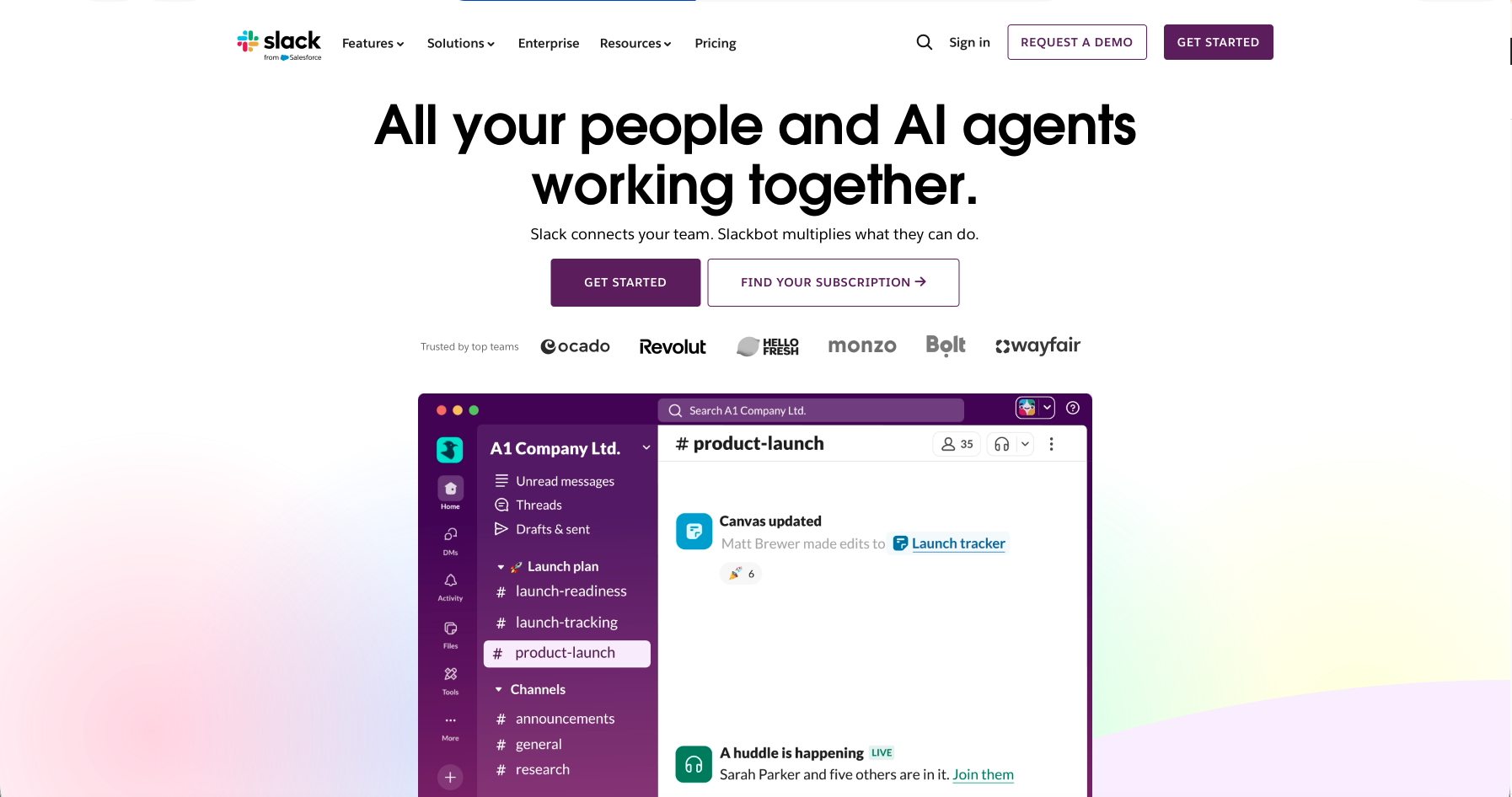
Slack is widely used for organised team communication through channels, direct messages, and integrations. It works well for companies that want structured conversations and searchable records.
Pros
- Strong channel-based organisation
- Good search and integration options
- Suitable for professional team collaboration
Cons
- Can become expensive as teams grow
- May feel overwhelming for very small businesses
- Requires consistent usage habits to remain organised
Microsoft Teams

Microsoft Teams combines chat, meetings, and file collaboration, especially for organisations already using Microsoft 365 tools.
Pros
- Strong video meeting and collaboration features
- Useful integration with Microsoft Office tools
- Good for formal workplace communication
Cons
- Interface can feel heavy for simple chat needs
- Best value often comes when already in the Microsoft ecosystem
- May be more than smaller teams require
Zoho Cliq
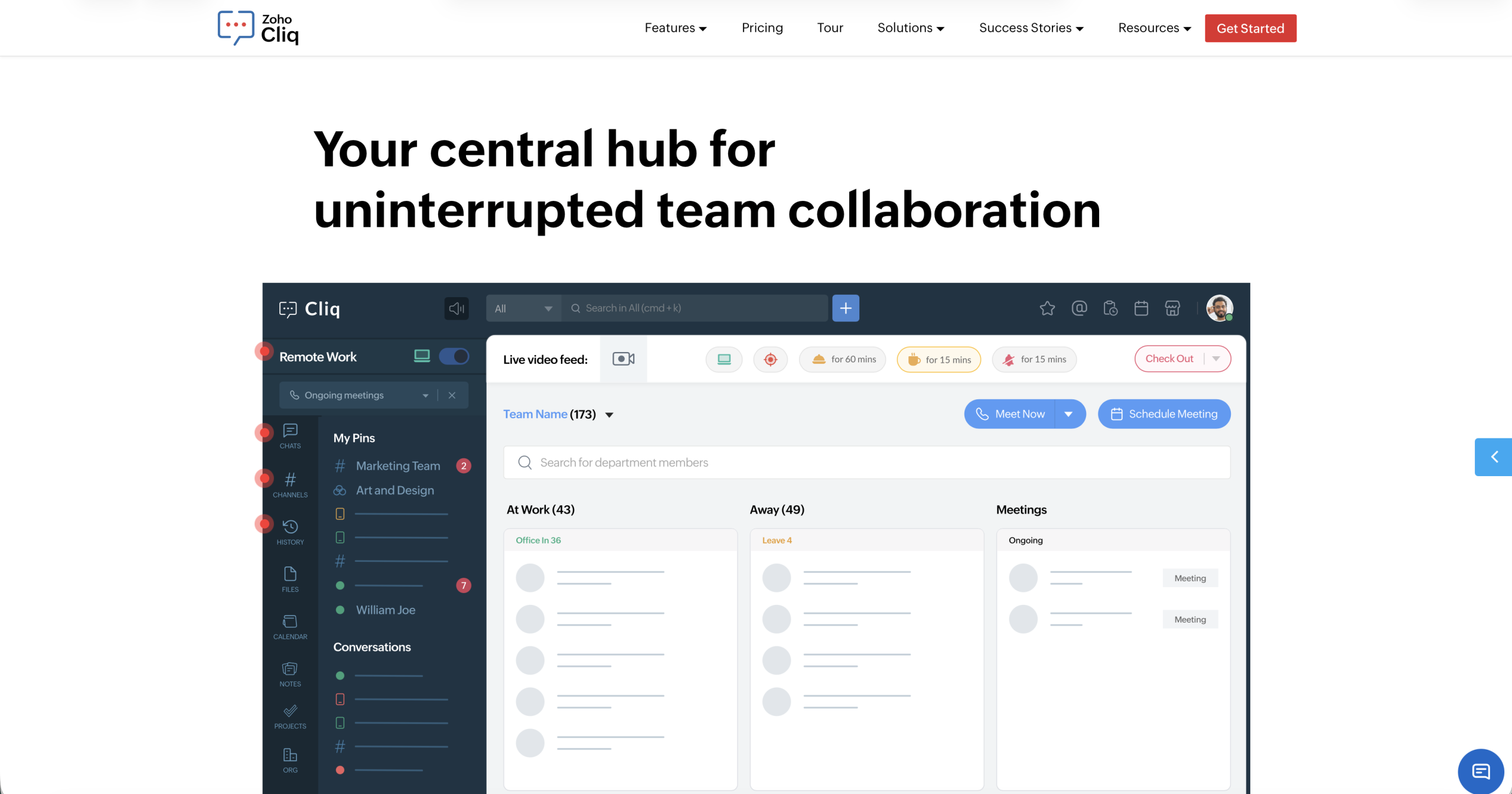
Zoho Cliq is part of the Zoho suite and offers team messaging with collaboration features for businesses already using Zoho applications.
Pros
- Fits well within the Zoho ecosystem
- Includes useful team collaboration tools
- Practical for businesses already managing work in Zoho
Cons
- Less widely adopted than Slack or Teams
- Value is higher when paired with other Zoho products
- May require adjustment for teams used to simpler chat apps
Discord

Discord began as a community and gaming platform but is now used by some teams for informal and flexible communication.
Pros
- Free and easy to set up
- Useful voice channels and community-style organisation
- Flexible for informal or creative teams
Cons
- Less formal business structure
- Not ideal for strict workplace controls
- Can feel less professional for corporate environments

WhatsApp remains one of the most widely used tools for everyday business communication in Nigeria, especially for quick coordination.
Pros
- Familiar and widely adopted
- Easy for quick updates and small team coordination
- Works well across most devices
Cons
- Poor structure for growing organisations
- Important messages get buried easily
- Weak separation between personal and work communication
These options show that communication platforms for businesses in Nigeria vary widely in structure, professionalism, and scalability. The right choice depends on how formal, distributed, and process-driven the organisation needs to be.
Why Communication Tools Are Not Enough
Communication platforms for businesses improve the speed and convenience of workplace conversations, but they do not solve the deeper operational needs of a growing business. A team can chat daily on Slack, Teams, or WhatsApp and still struggle with late payroll, unclear attendance records, missing employee data, and weak compliance processes. Messaging tools are designed for interaction, not for structured employee management. As organisations expand, the gap between conversation and operations becomes more visible. Managers may discuss tasks in group chats while still depending on spreadsheets for attendance, manual records for leave, and disconnected systems for salary processing. This is why communication platforms for businesses in Nigeria should be viewed as only one layer of a broader operational setup.
Automation and other operational setup like attendance management become especially important at this stage. When attendance is still tracked manually or scattered across messages, payroll accuracy suffers and disputes increase. Businesses that invest in communication tools without strengthening their HR systems often discover that information moves quickly, but processes remain unreliable. Structured systems help convert everyday work activity into accurate records, consistent approvals, and cleaner payroll operations. This is the point where communication efficiency needs to be matched with operational discipline.
Salario helps fill that gap by supporting the structured side of HR operations. While teams continue using their preferred communication platforms for daily collaboration, Salario provides a clearer framework for payroll processing, employee data management, and process consistency. It supports more reliable attendance-related workflows, reduces dependence on manual tracking, and helps businesses maintain better operational control as they grow. In practical terms, communication tools keep people connected, while Salario helps ensure that the systems behind salaries, records, and people processes remain organised. For businesses evaluating communication platforms for businesses in Nigeria, the real advantage comes from pairing strong communication tools with dependable people-management systems rather than expecting chat platforms to carry the full operational load.
Conclusion
The best communication platforms for businesses in Nigeria depend on team size, work style, and the level of structure required. Slack and Microsoft Teams offer stronger workplace organisation, Zoho Cliq fits well within the Zoho ecosystem, while Discord, Telegram, and WhatsApp remain popular for speed and familiarity. Each option has trade-offs. What remains clear is that communication alone is not enough. Growing businesses also need reliable systems for payroll, attendance, and people operations. Salario complements communication tools by helping organisations manage the structured side of work more effectively.
Ready to strengthen the operational side of your business while your team communicates better? Book a demo with our team today. Better communications matter, but structured systems keep the business running!